You do not need much time or special equipment. Choose an exercise that suits your current goal and perform it calmly and with control.
01 – Choose your goal
Mobilise, strengthen or relieve Decide what you would like to focus on today.
02 – Move calmly
Quality before repetitions Perform each movement with control and stay within a range that feels comfortable for you.
03 – Move regularly
Short sessions count Even brief movement breaks can fit easily into everyday life. Consistency matters.
Note: Exercises should be adapted to your individual condition. Seek medical assessment if symptoms are severe, new or persistent.
MOBILITY
Bring movement into your back.
Mobility exercises bring movement to the spine, shoulders and hips. They are particularly suitable for short movement breaks during the day.
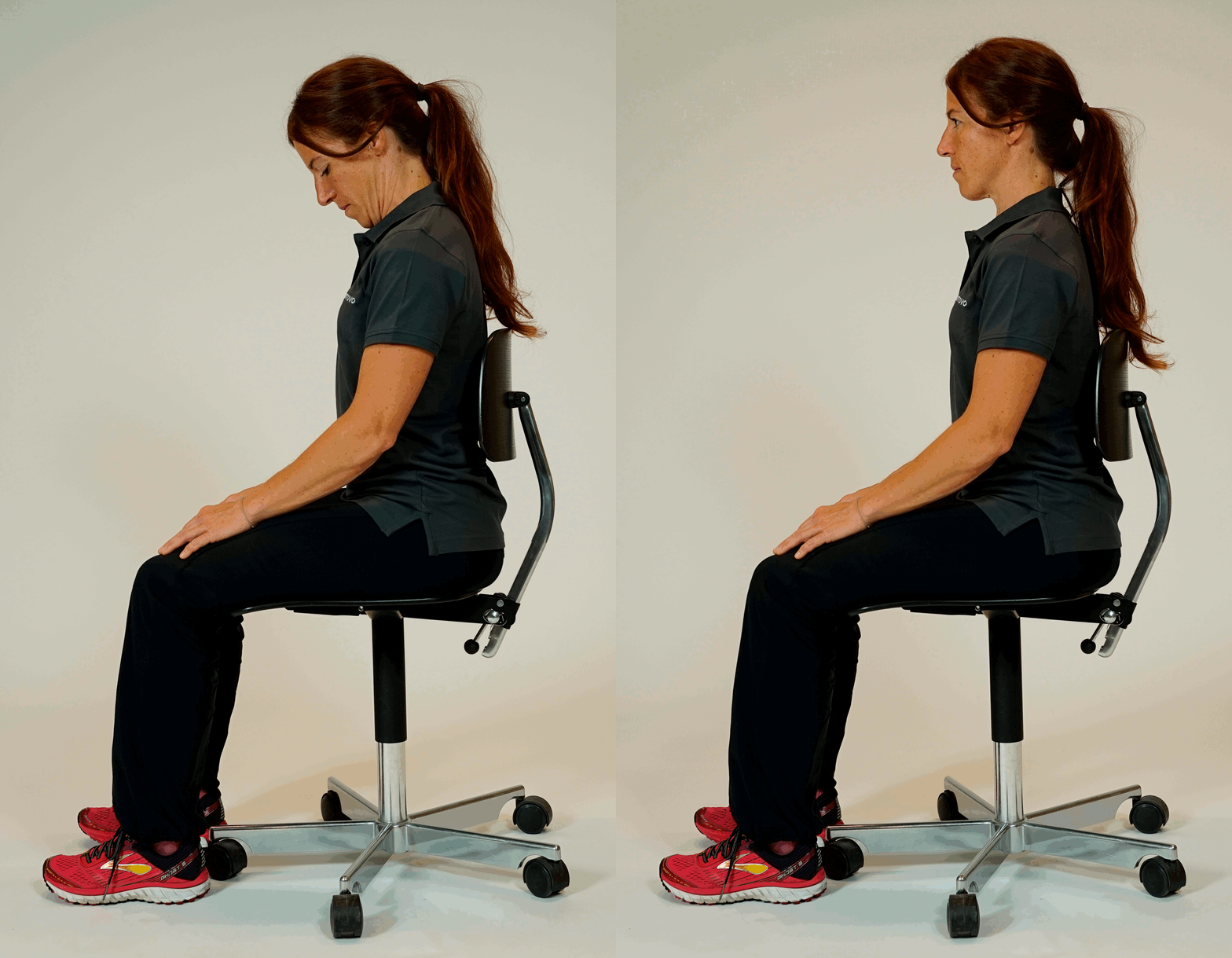
1. Seated Cat–Cow
MOBILISE THE THORACIC SPINE Move towards the front of your chair and rest your arms on your thighs. First round your back, then move gently and with control into the opposite direction.
Duration: Hold each position for 3 seconds and repeat for 10–12 rounds.
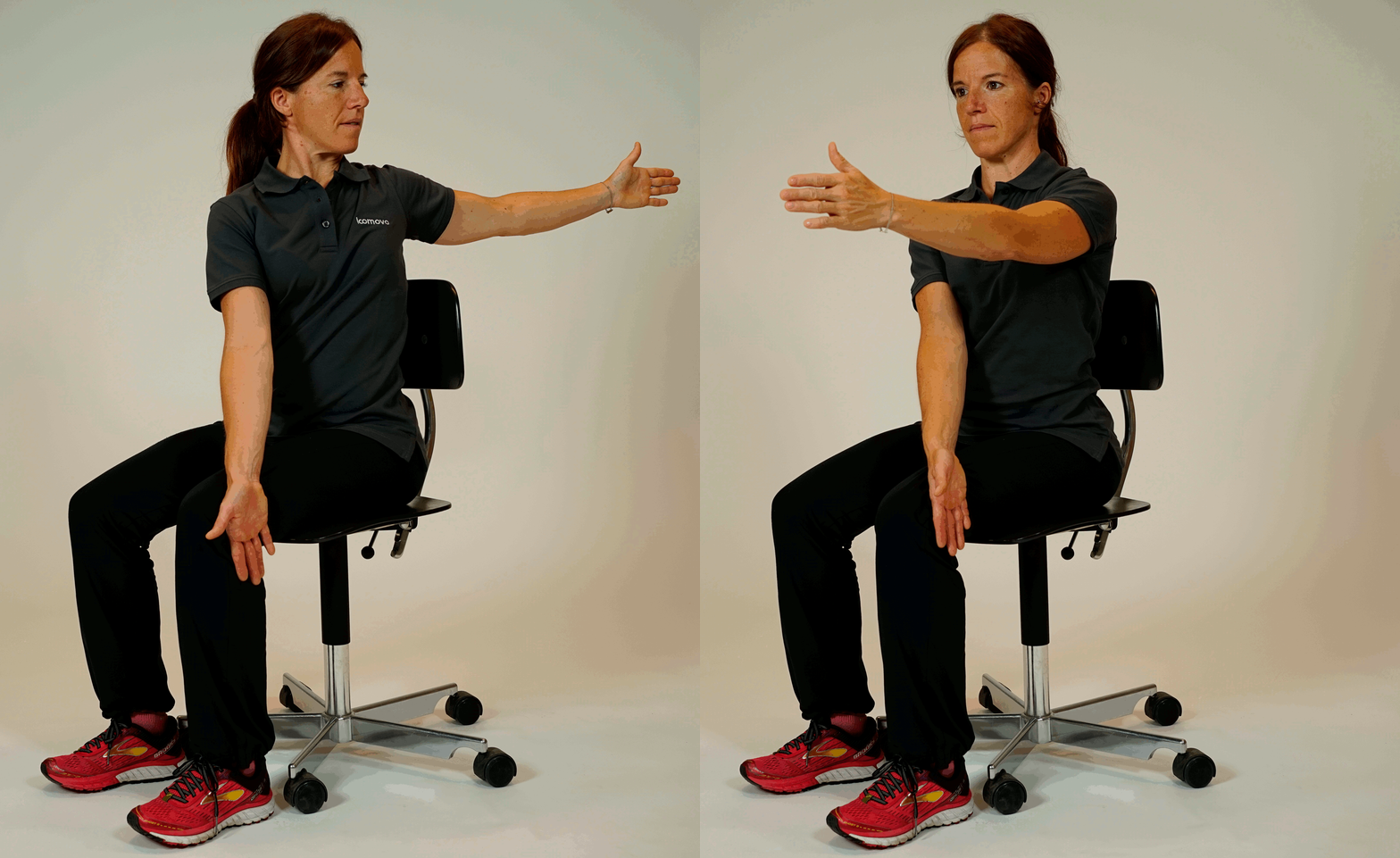
2. Seated trunk rotation
Mobilises the thoracic spine and introduces rotation to your back. Sit on a chair. Extend one arm horizontally to the side. Rotate towards the extended arm and place your other hand on the outside of your knee. Gently press against the knee to increase the rotation.
Duration: Hold for 10–15 seconds and repeat 3 times on each side.
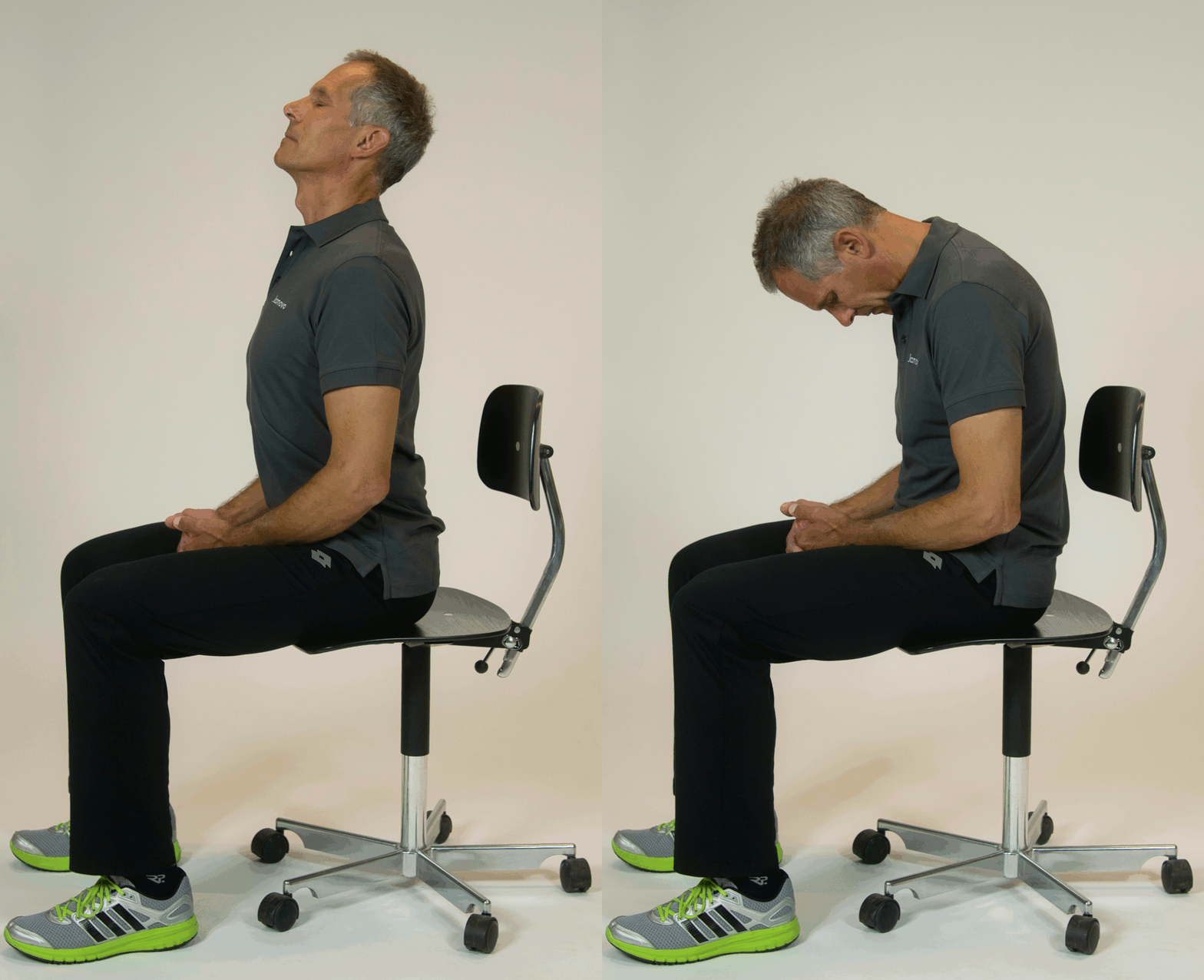
3. Mobilise the cervical spine
MOBILISE THE CERVICAL SPINE Introduces gentle movement to the neck.
Sit upright on a chair. Slowly tilt your head forwards and backwards.
Duration: Hold each end position for 10 seconds. Repeat 5–7 times.
STRENGTHENING
Make your back more resilient.
Strengthening exercises train the muscles of the back and trunk. Regular, appropriately dosed loading helps your body adapt to demands and build stability.
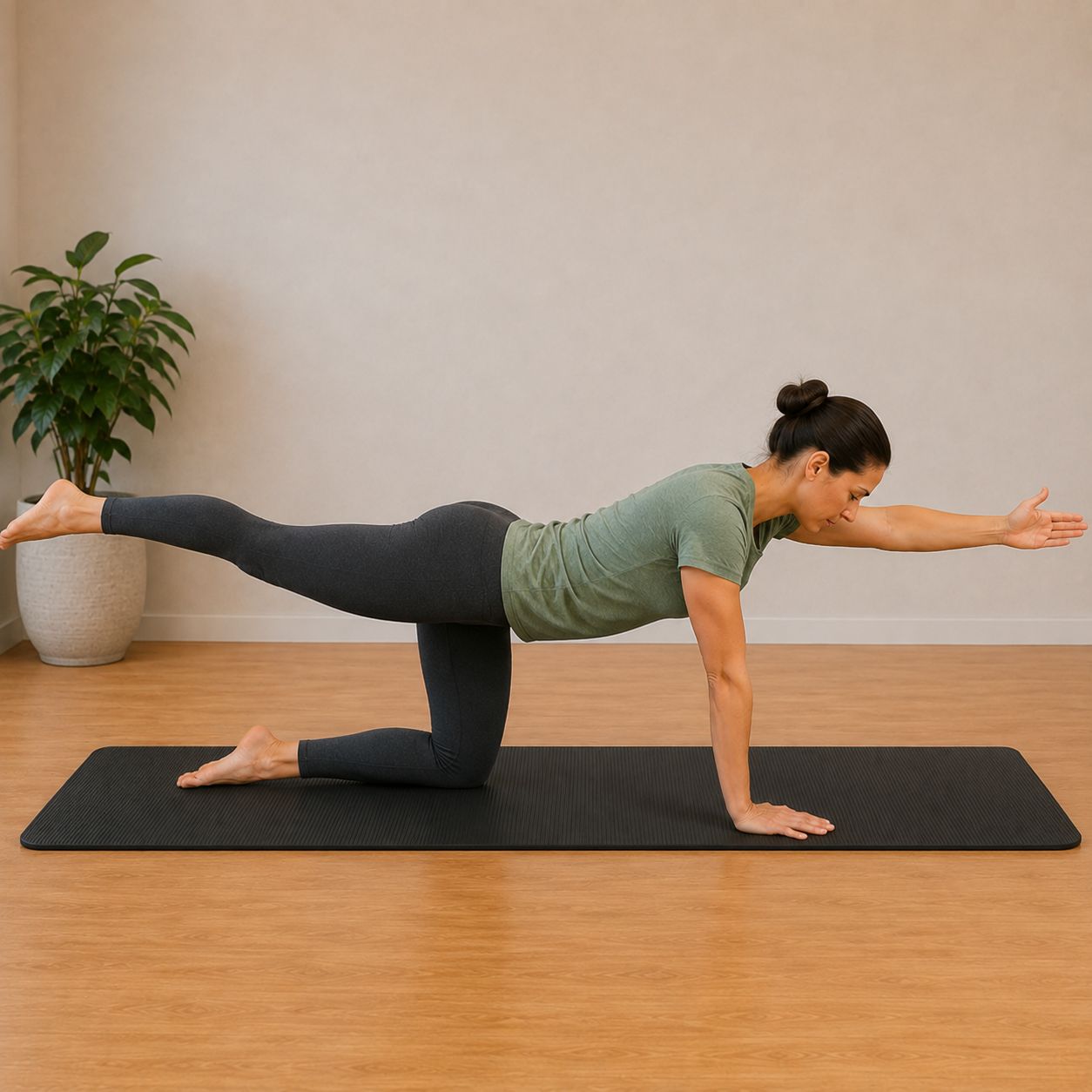
1. Bird Dog
TRUNK · STABILISE From all fours, extend one arm and the opposite leg. Keep your trunk as stable as possible and perform the movement slowly and with control.
Repetitions: 6–10 on each side
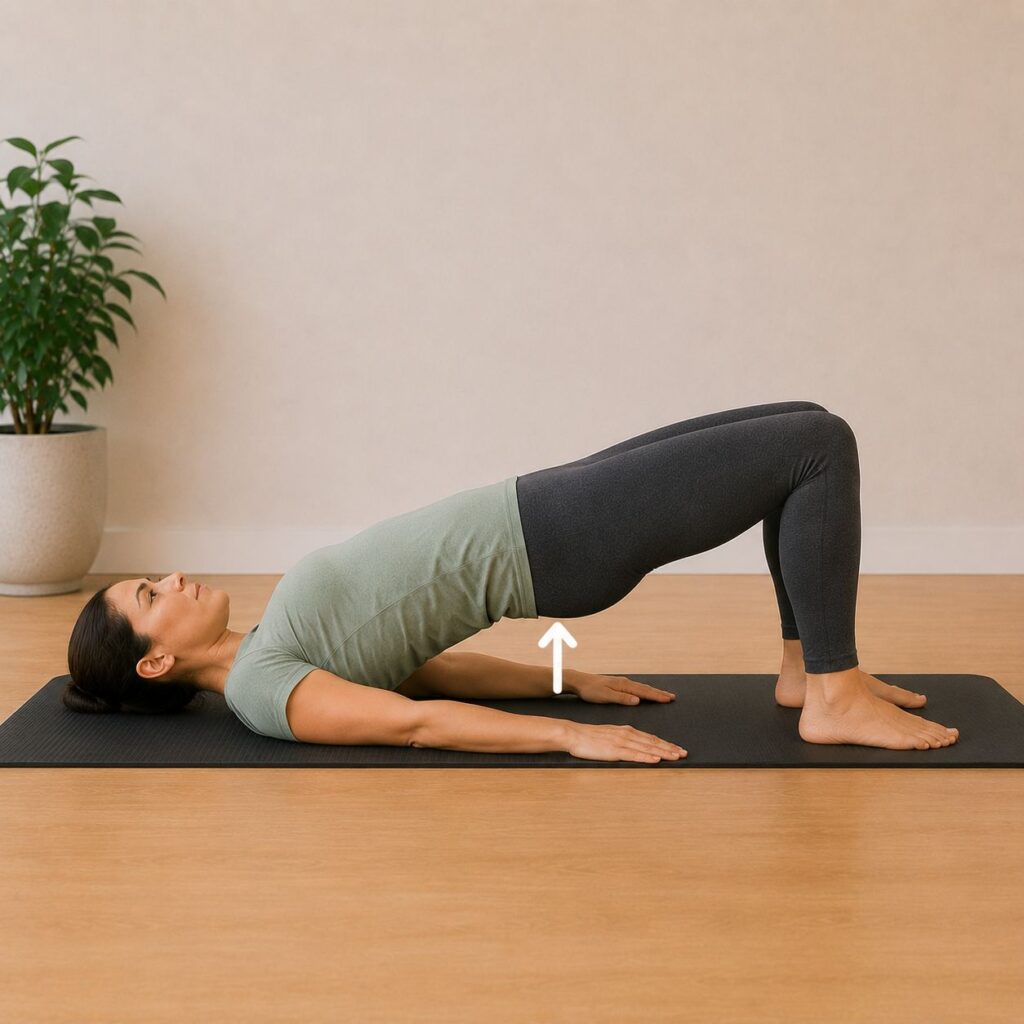
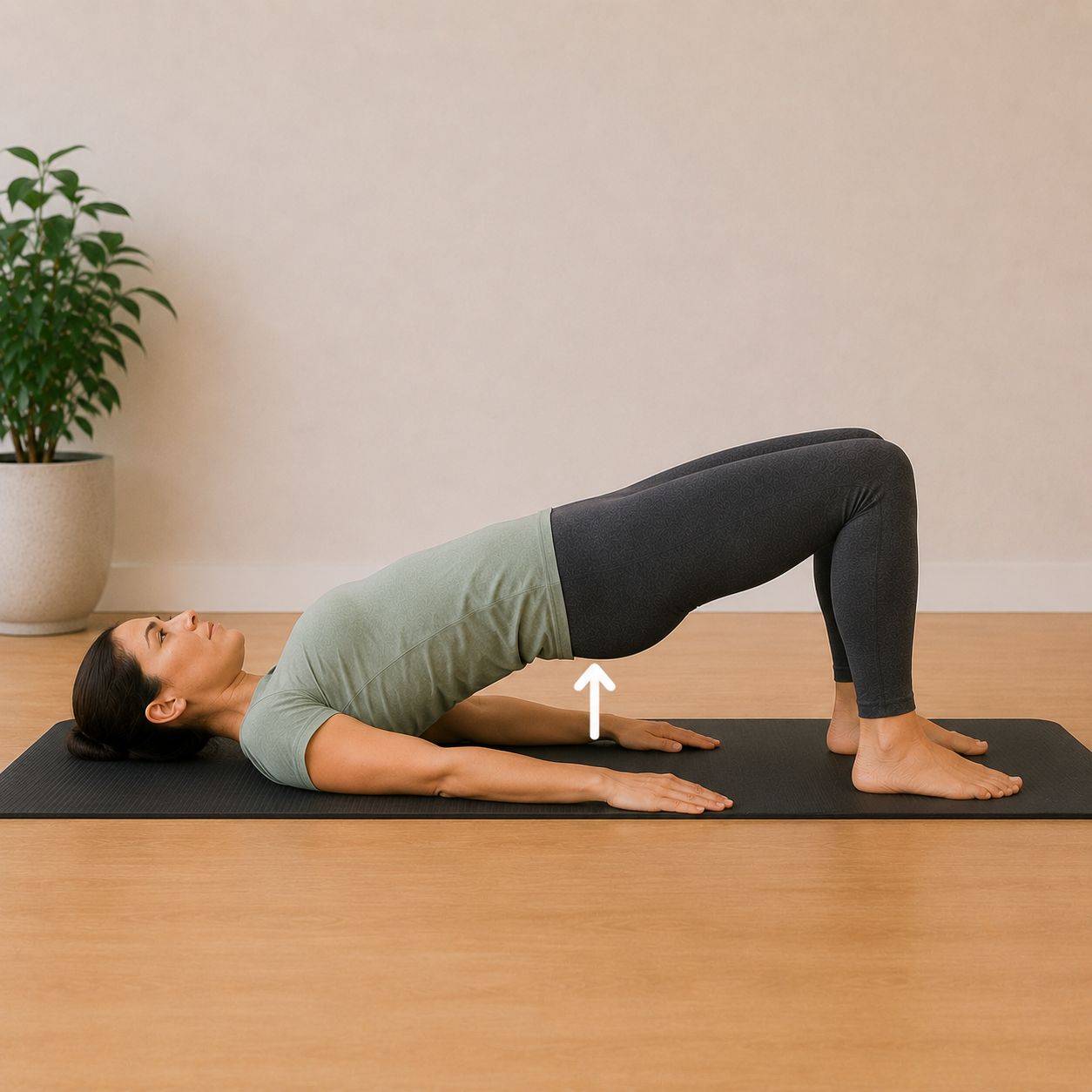
2. Glute Bridge
GLUTES & TRUNK · STRENGTHEN Lie on your back, lift your pelvis with control and then slowly lower it again.
Repetitions: 10–15
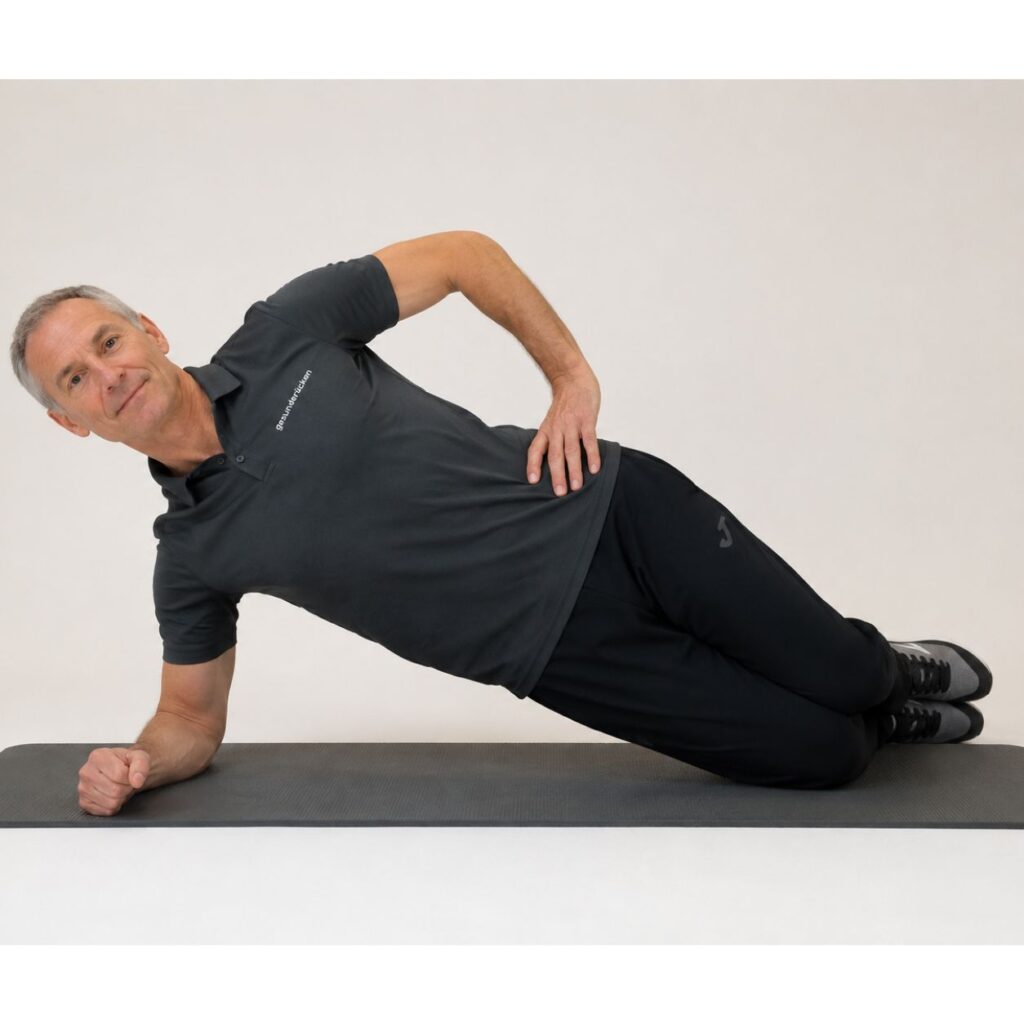
3. Side Plank – easier variation
SIDE OF THE TRUNK · STABILISE Support yourself on one forearm and knee and lift your pelvis. Keep your body as stable as possible.
Duration: about 15–30 seconds on each side
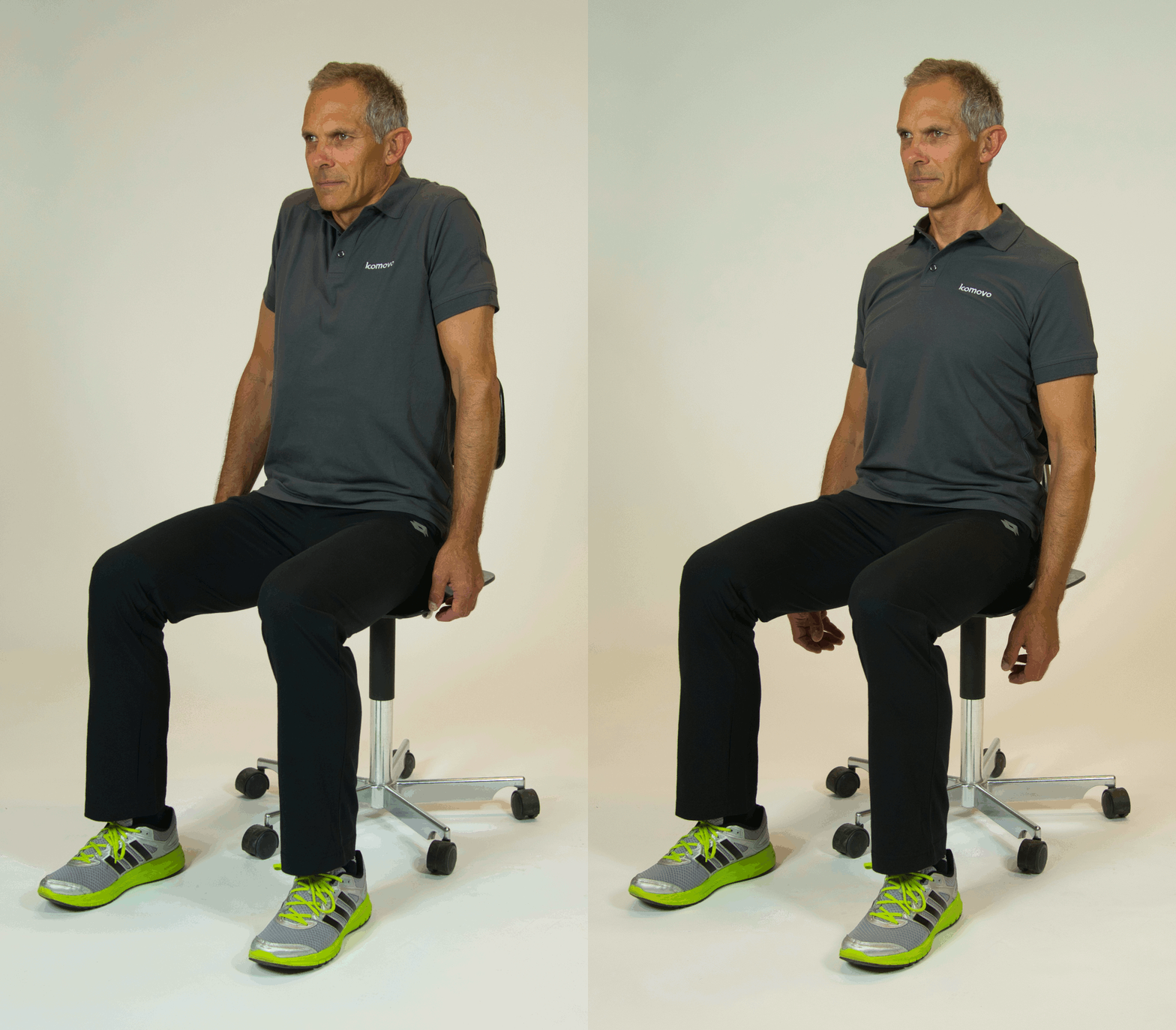
4. Shoulder elevation and depression
NECK & SHOULDERS · ACTIVATE
Activates the shoulder and neck muscles. Sit on a chair with your arms hanging down. Lift your shoulders as far as is comfortable. Hold for 5 seconds, then draw them down.
Repetitions: Repeat 5–10 times.
RELIEF & MOBILITY
Give your back a deliberate break.
Calm movements and stretching exercises can help interrupt one-sided strain and bring more movement back into your day.
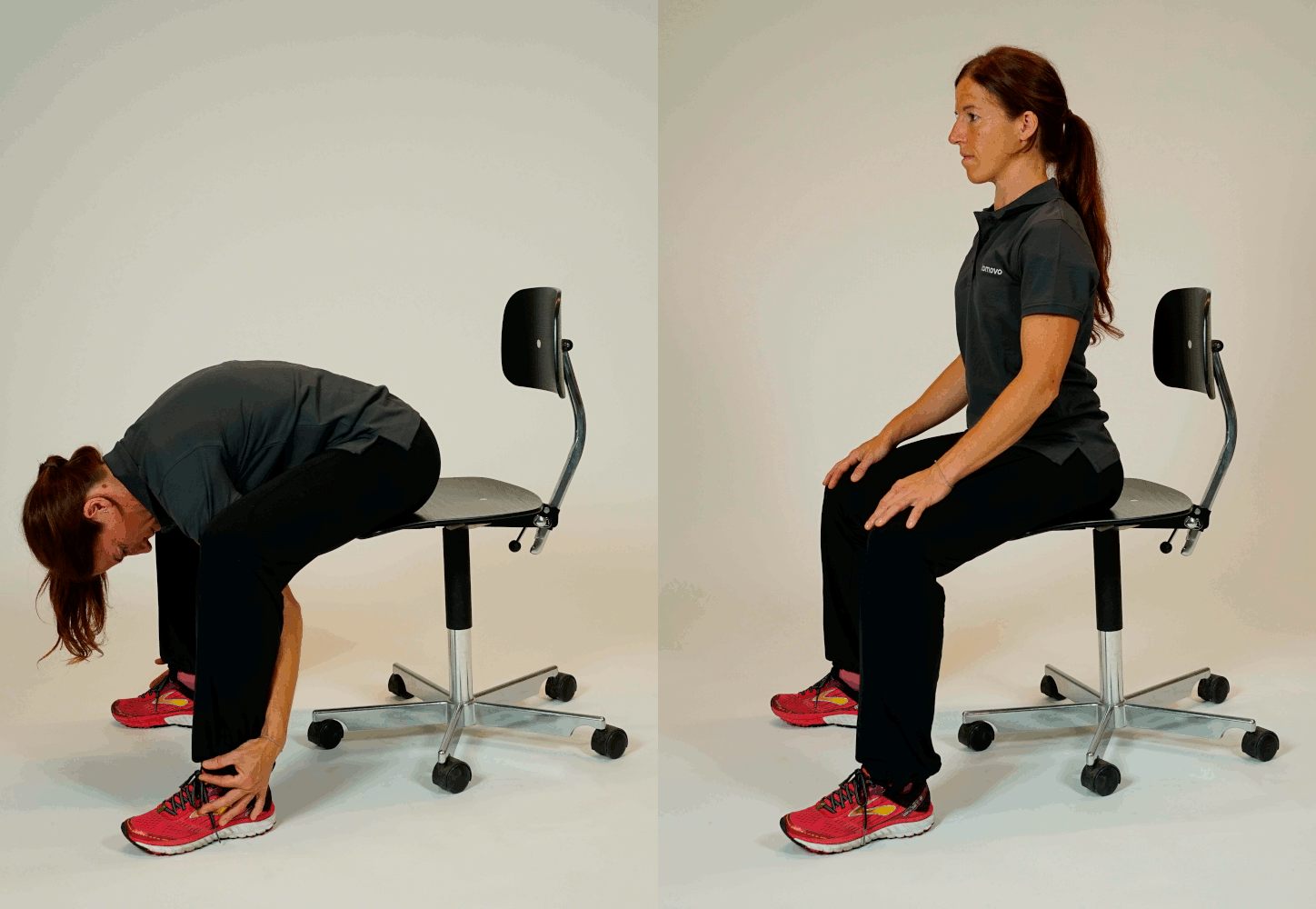
1. Posterior-chain stretch
BACK & HAMSTRINGS · STRETCH Relax the muscles along the back of the body through stretching. Sit on a chair. Lengthen your upper body and place your feet about shoulder-width apart. Reach for the outside of your ankles, bring your shoulders between your knees and round your back.
Duration: Hold for 20–30 seconds and repeat 5 times.
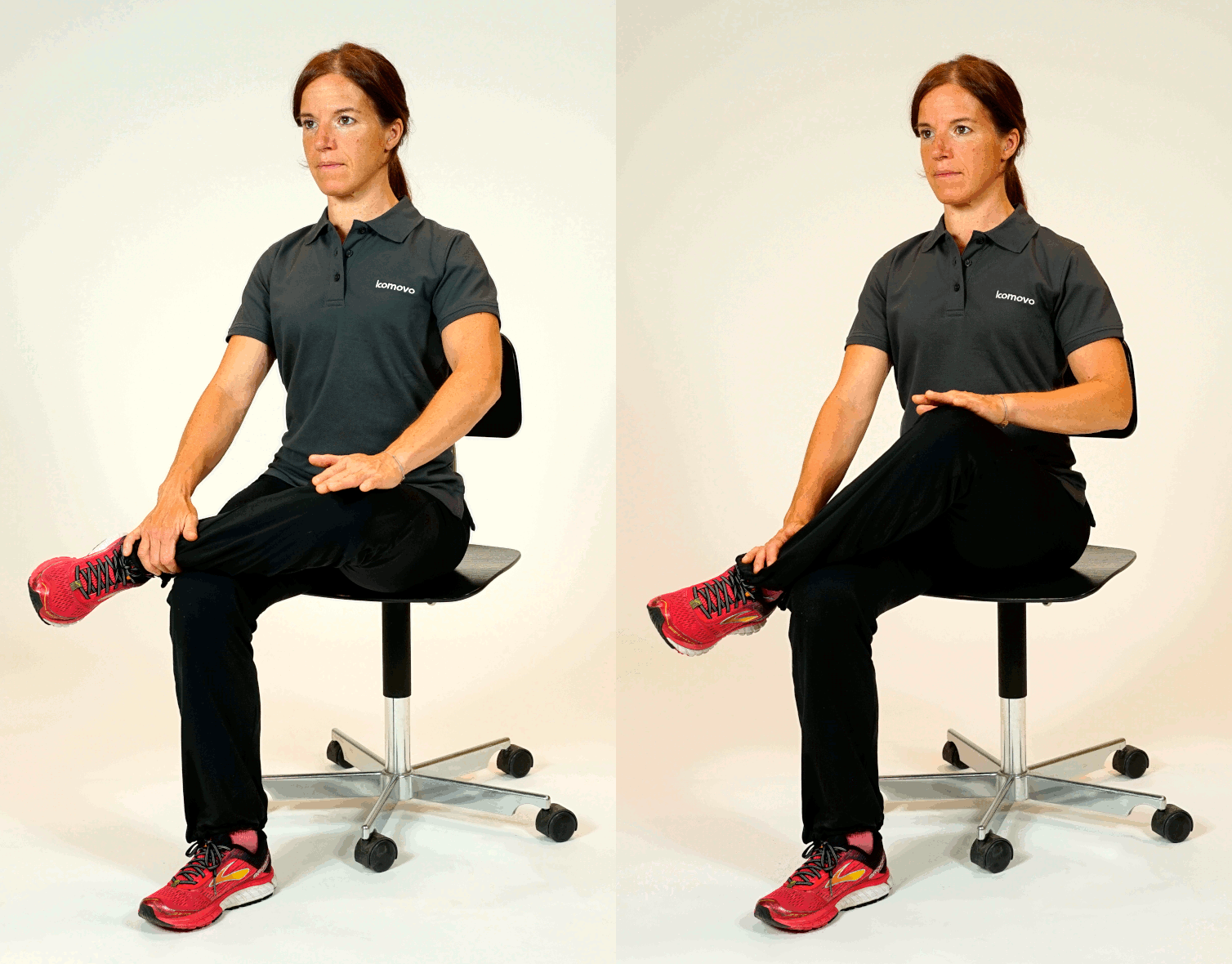
2. Glute and hip stretch
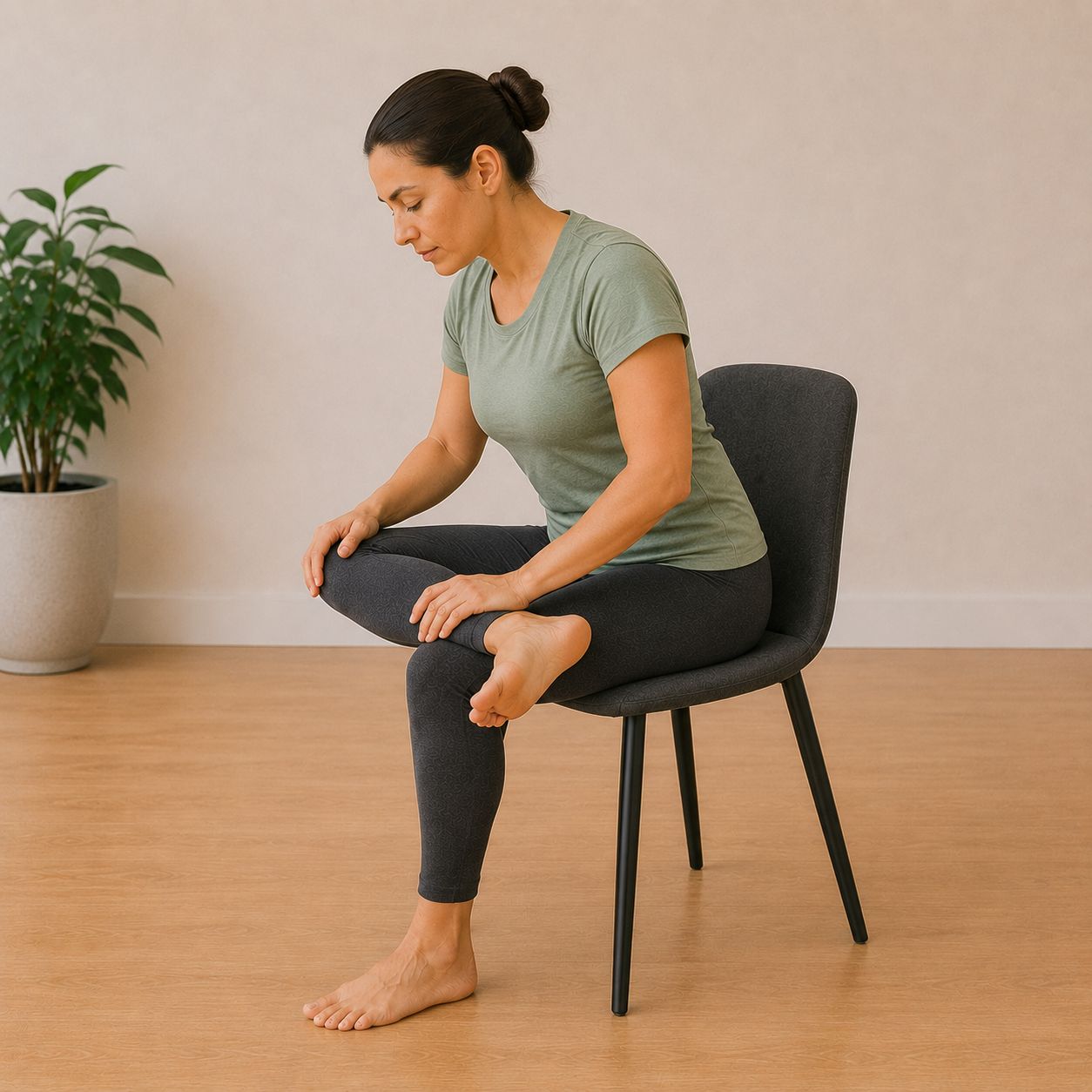
HIP · STRETCH Relax the hip and gluteal muscles. Sit upright on a chair, gently engage your abdomen and place both feet on the floor with your knees at about 90 degrees. Place your right foot on your left thigh and allow the right knee to move outwards. Place a hand on the right knee and press down gently to increase the stretch.
Duration: Hold for 20–30 seconds and repeat twice on each side.
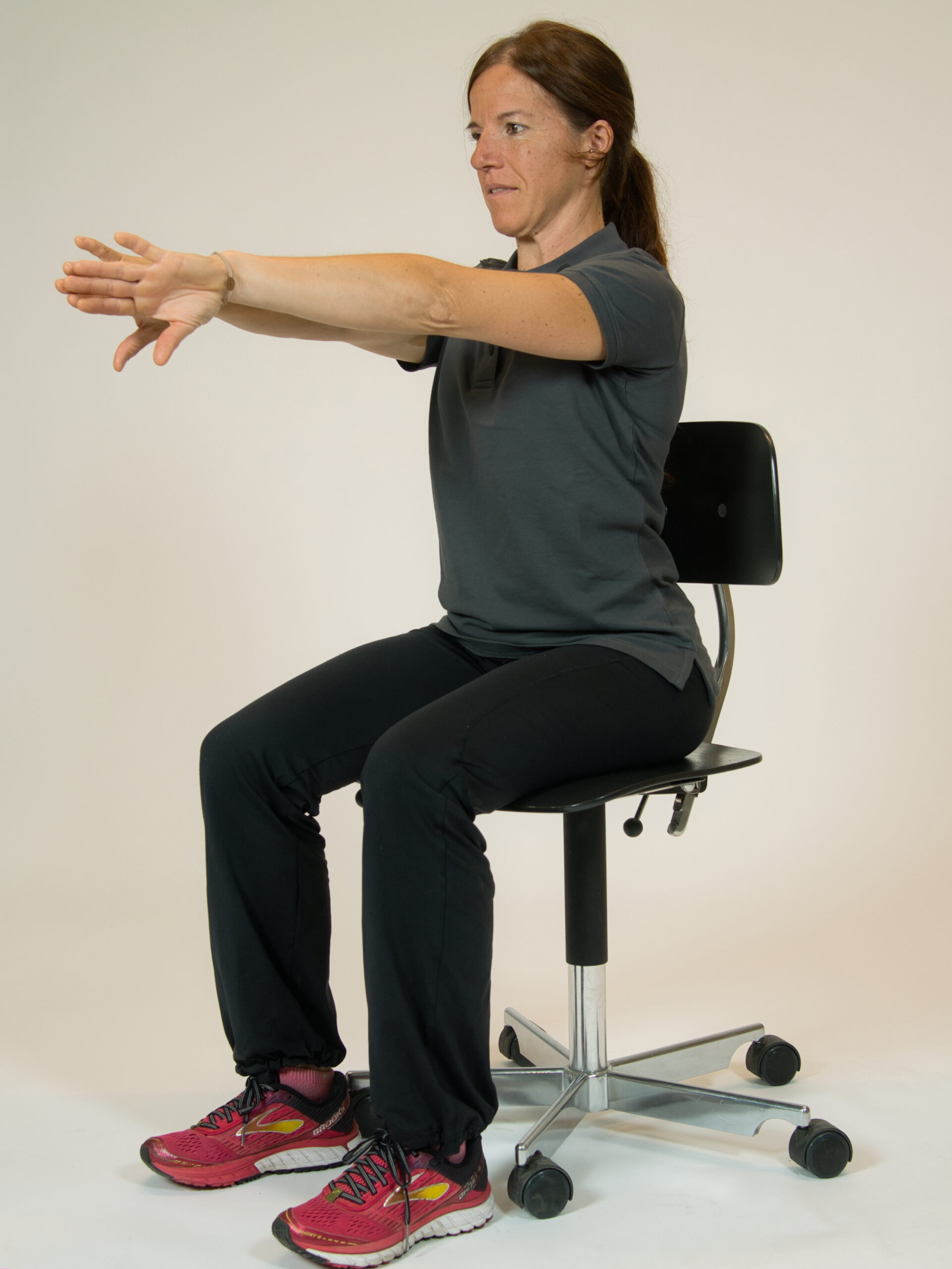
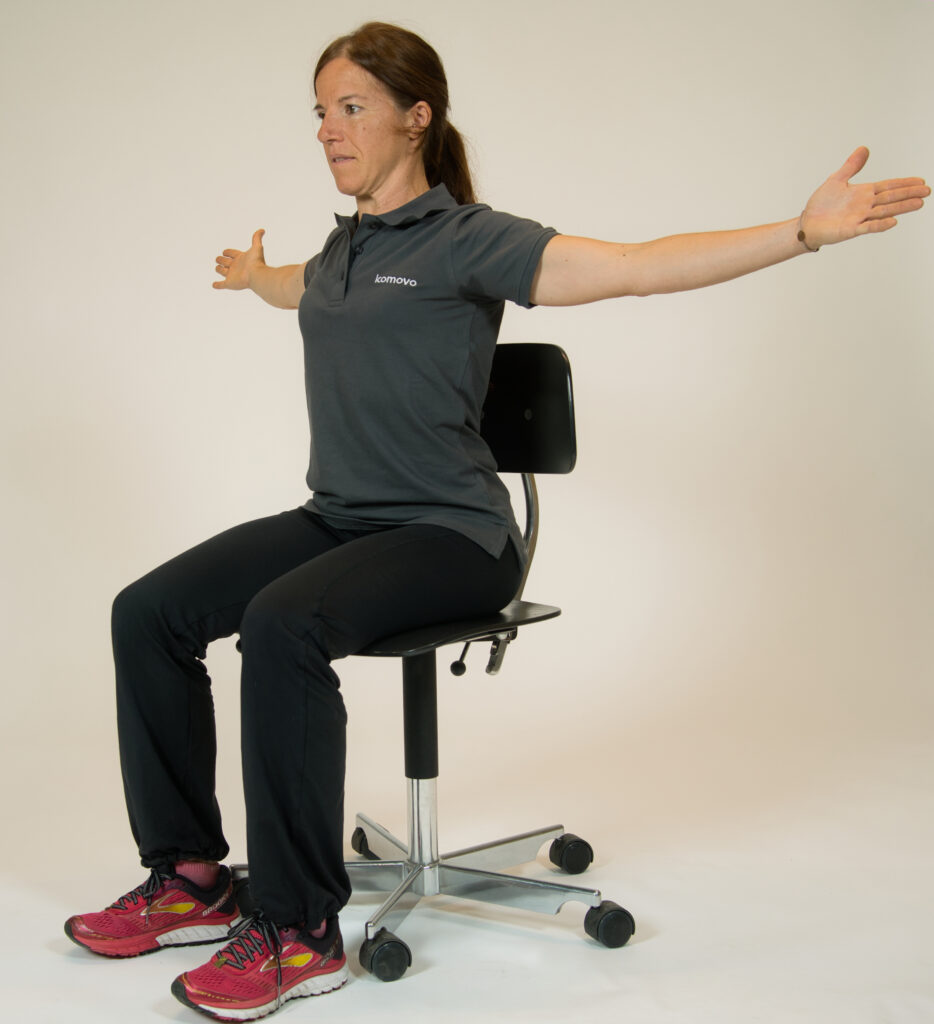
3. Open the chest
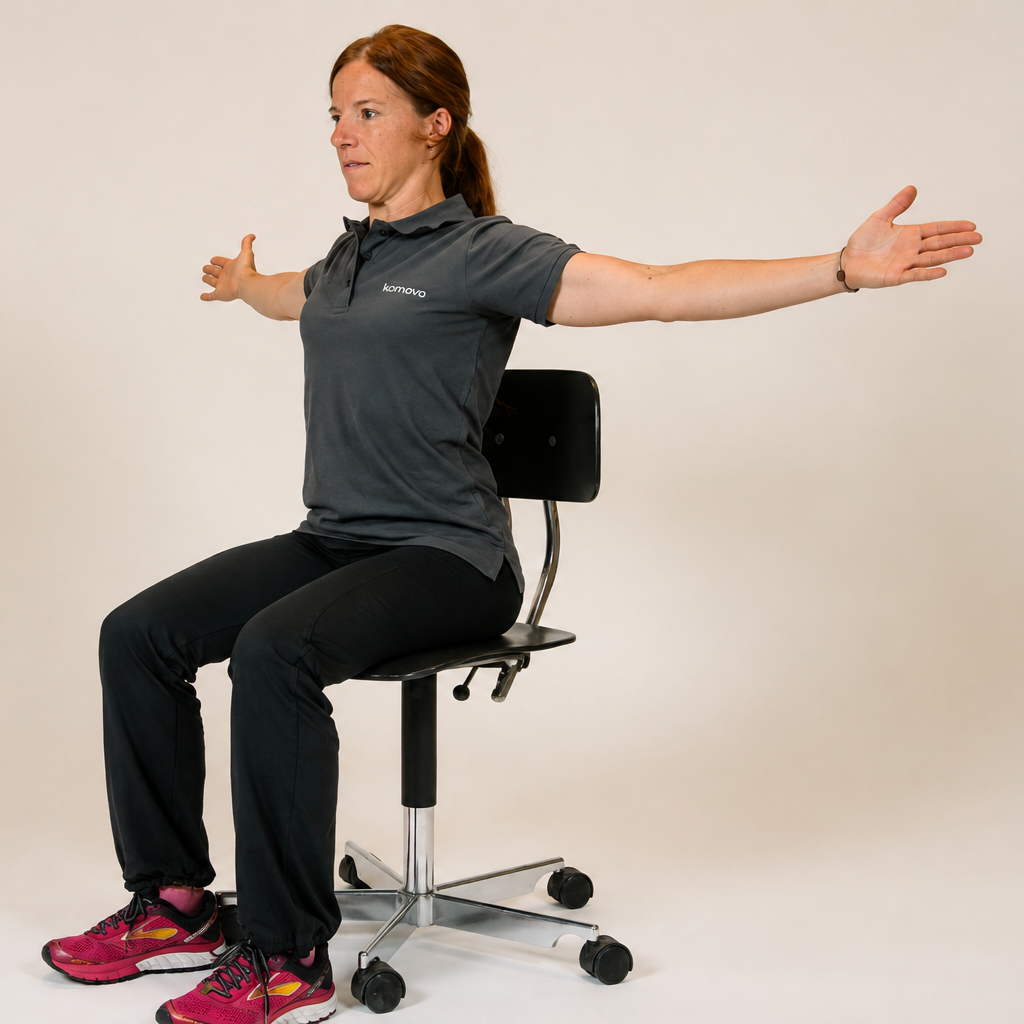
CHEST & SHOULDERS · MOBILISE Mobilises the shoulders and chest. Sit on a chair. Extend your arms horizontally in front of you with the backs of your hands touching. Move your arms out to the sides and as far back as feels comfortable.
Duration: Hold for 10–15 seconds and repeat 3 times.
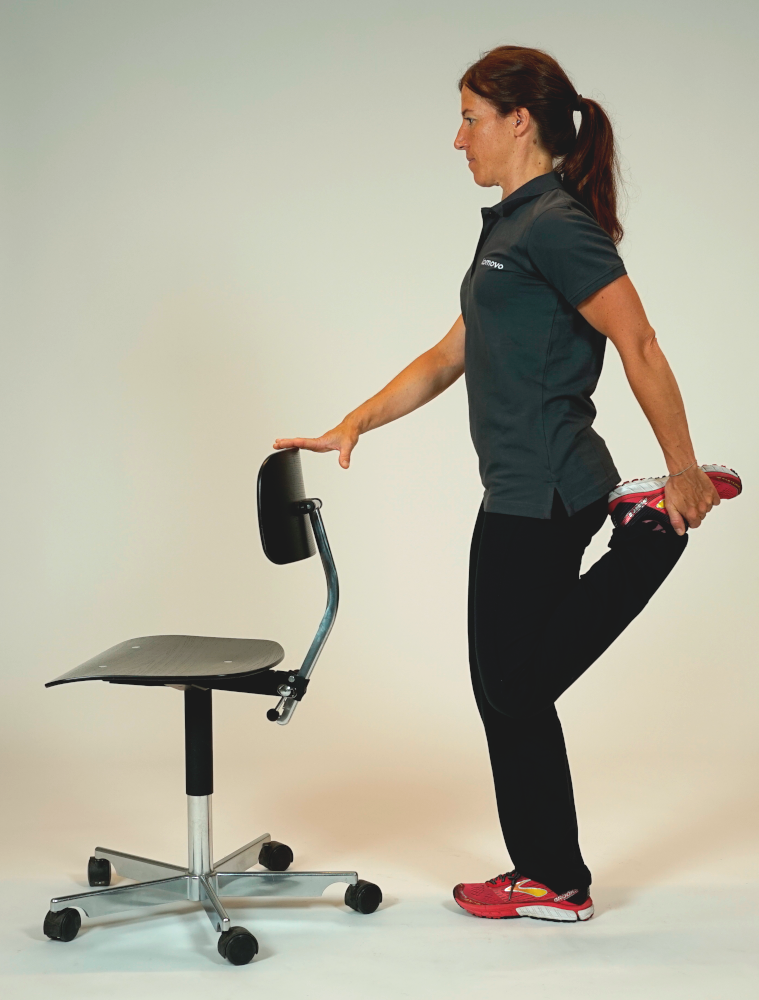
4. Front thigh stretch
HIP & THIGH · STRETCH Stretches the muscles at the front of the thigh. Stand upright and bend one leg behind you. Use one hand to gently increase the stretch. Avoid leaning your upper body forwards.
Duration: Hold for 20–30 seconds and repeat twice on each side.
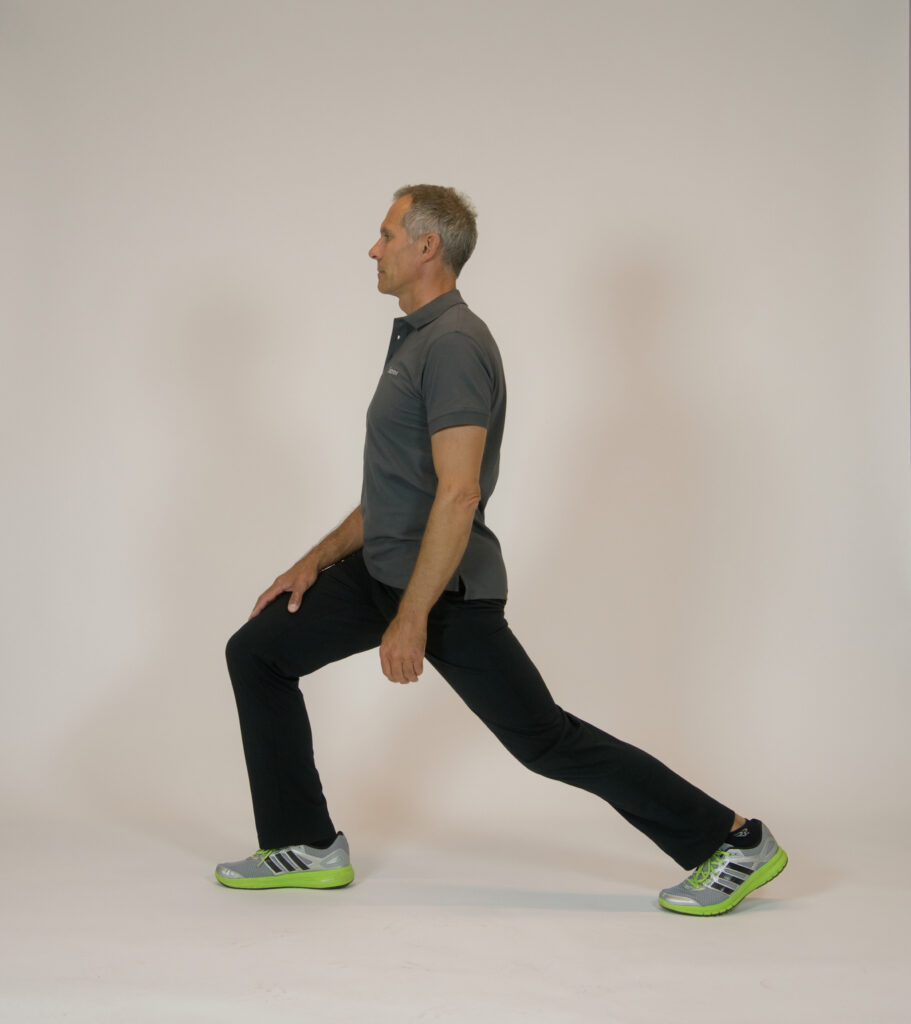
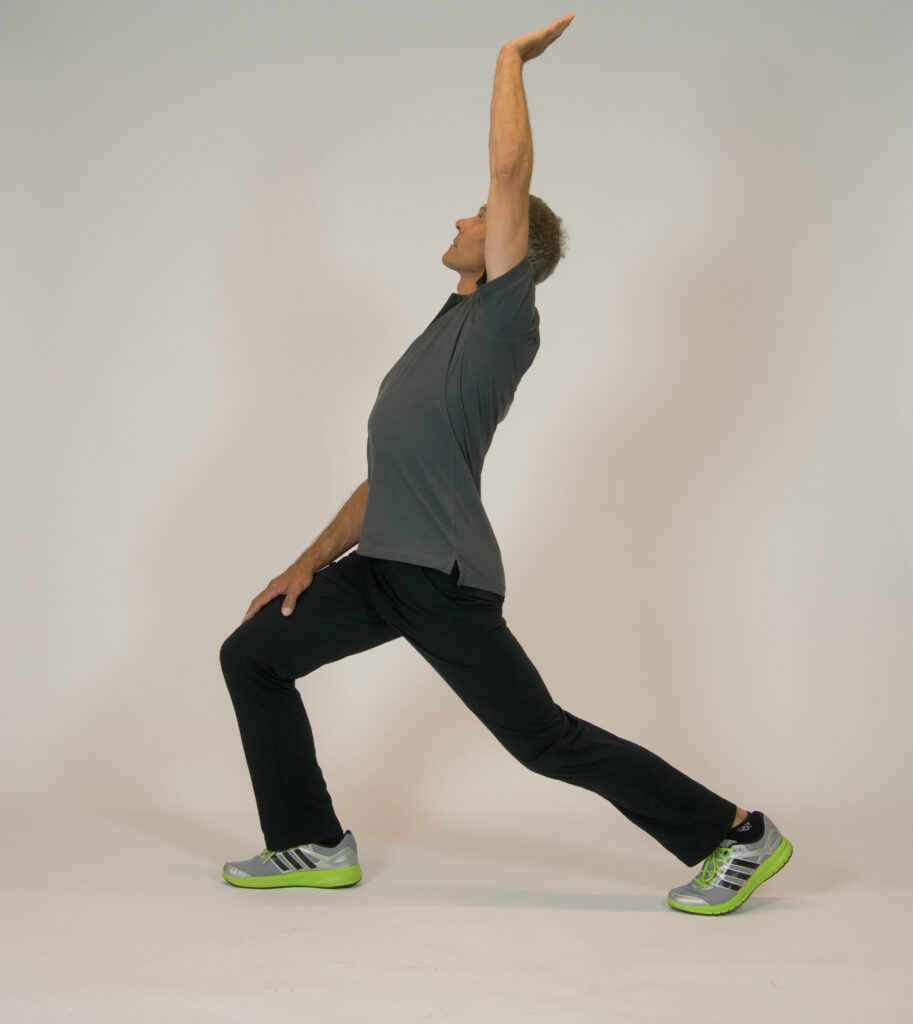
5. Anterior-chain stretch
HIP & TRUNK · STRETCH
Relax the muscles along the front of the trunk.
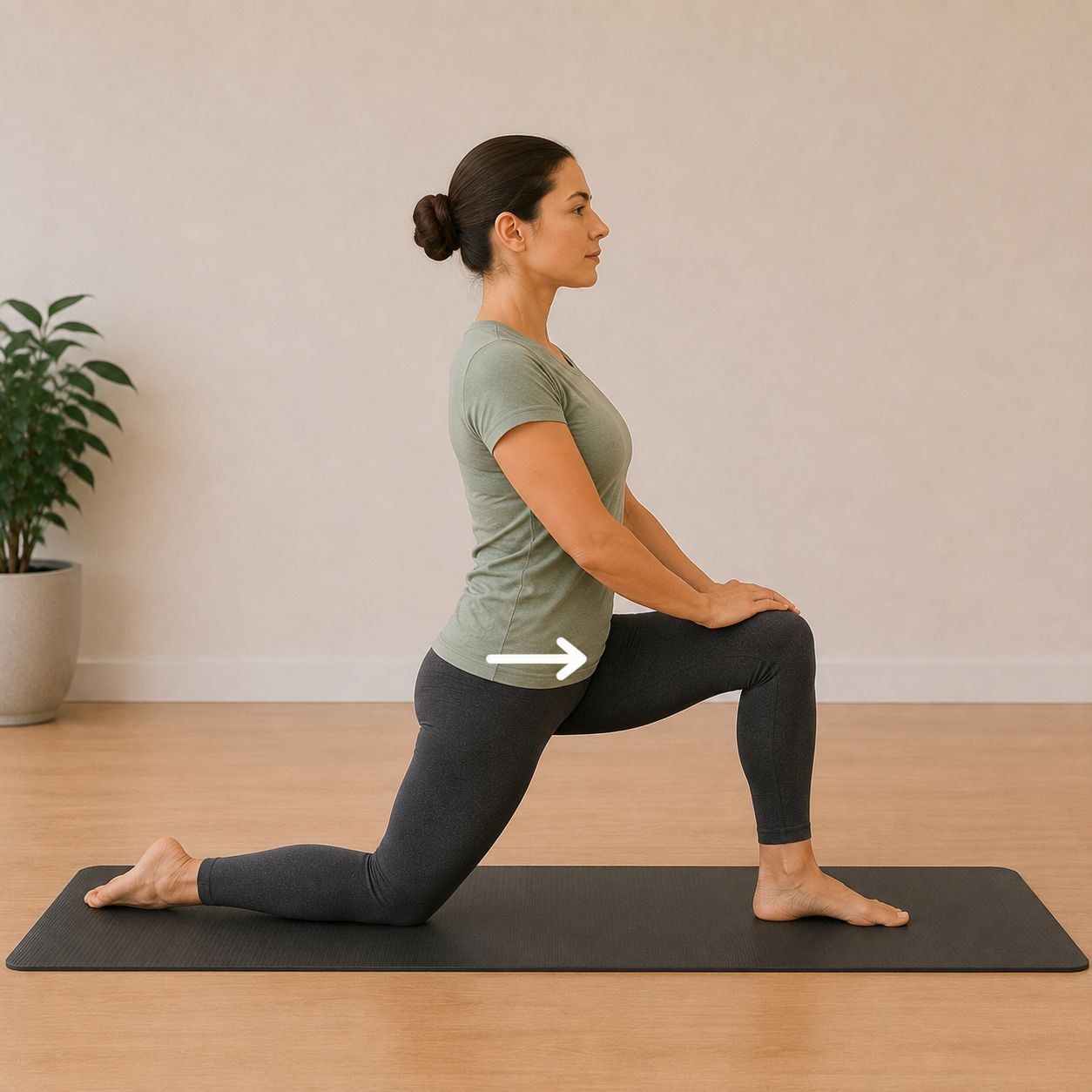
Take a wide lunge with your right leg in front. Reach your left arm upwards and gently move your pelvis forwards.
Duration: Hold for 20–30 seconds, then change sides. Repeat 3 times on each side.
CHOOSE BY AREA
Where is your back causing problems?
Find exercises for the area you want to mobilise, strengthen or relieve.
Lower back
Exercises for mobility, trunk stability and relief. View exercises →
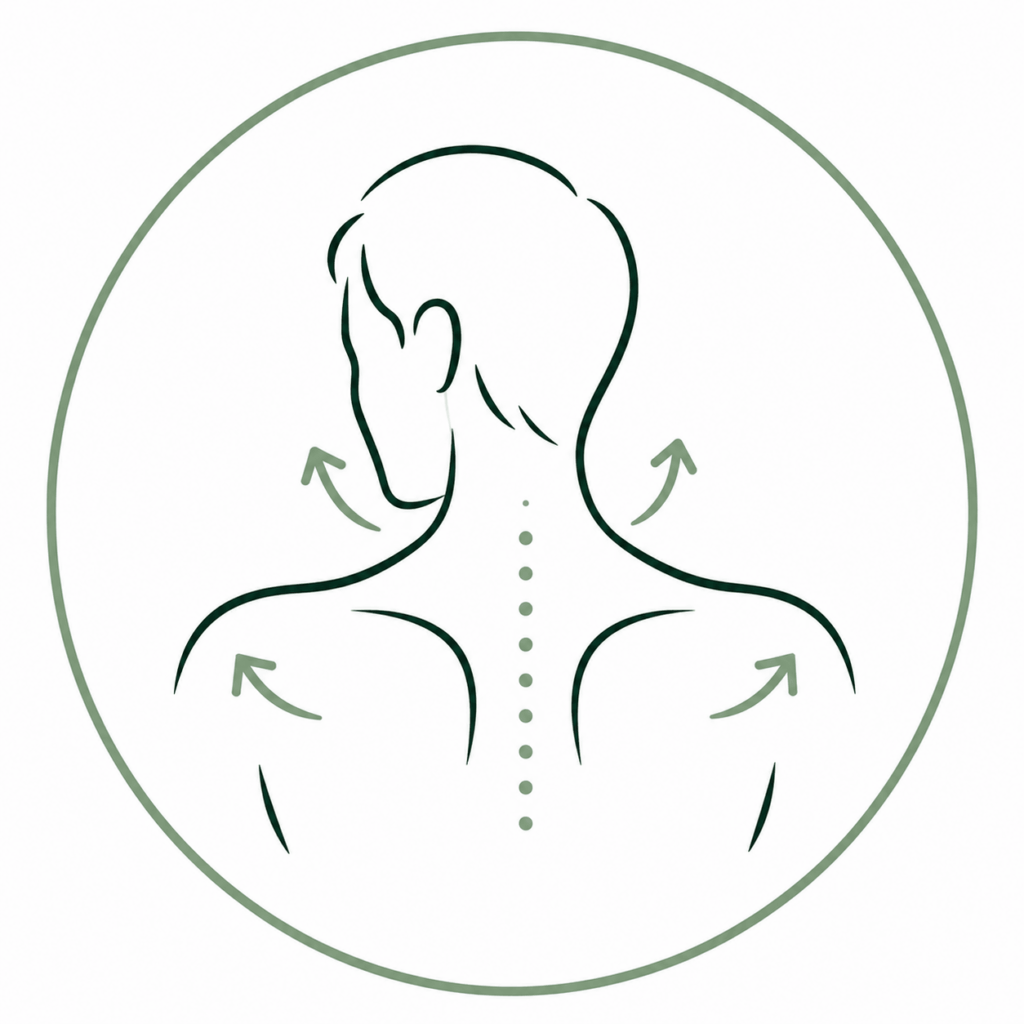
Neck & shoulders
Movement and activation for the neck, shoulders and upper back. View exercises →
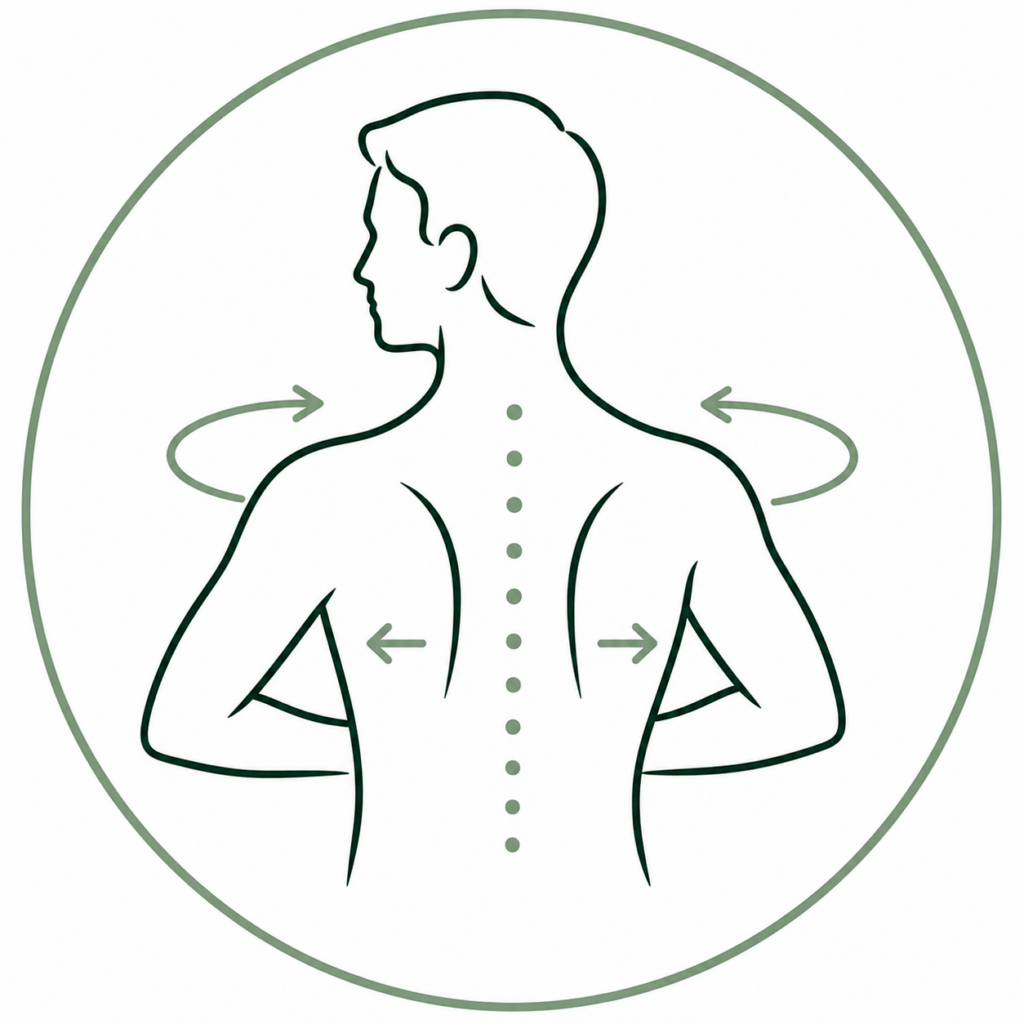
Thoracic spine
Exercises for rotation, upright posture and mobility. View exercises →
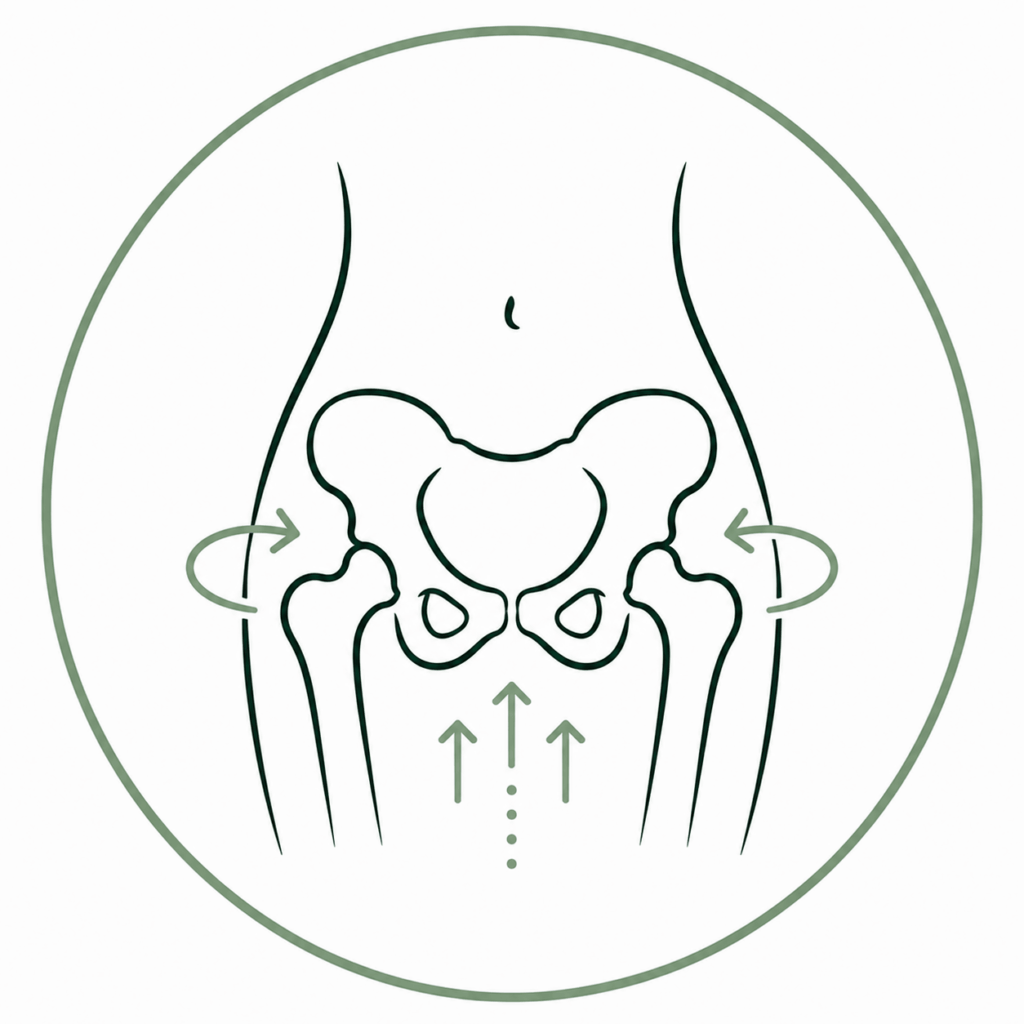
Hips & pelvis
Mobility, strengthening and stretching around the hips and pelvis. View exercises →
Lower back
These exercises bring movement to the pelvis and lumbar spine and activate the stabilising trunk muscles.
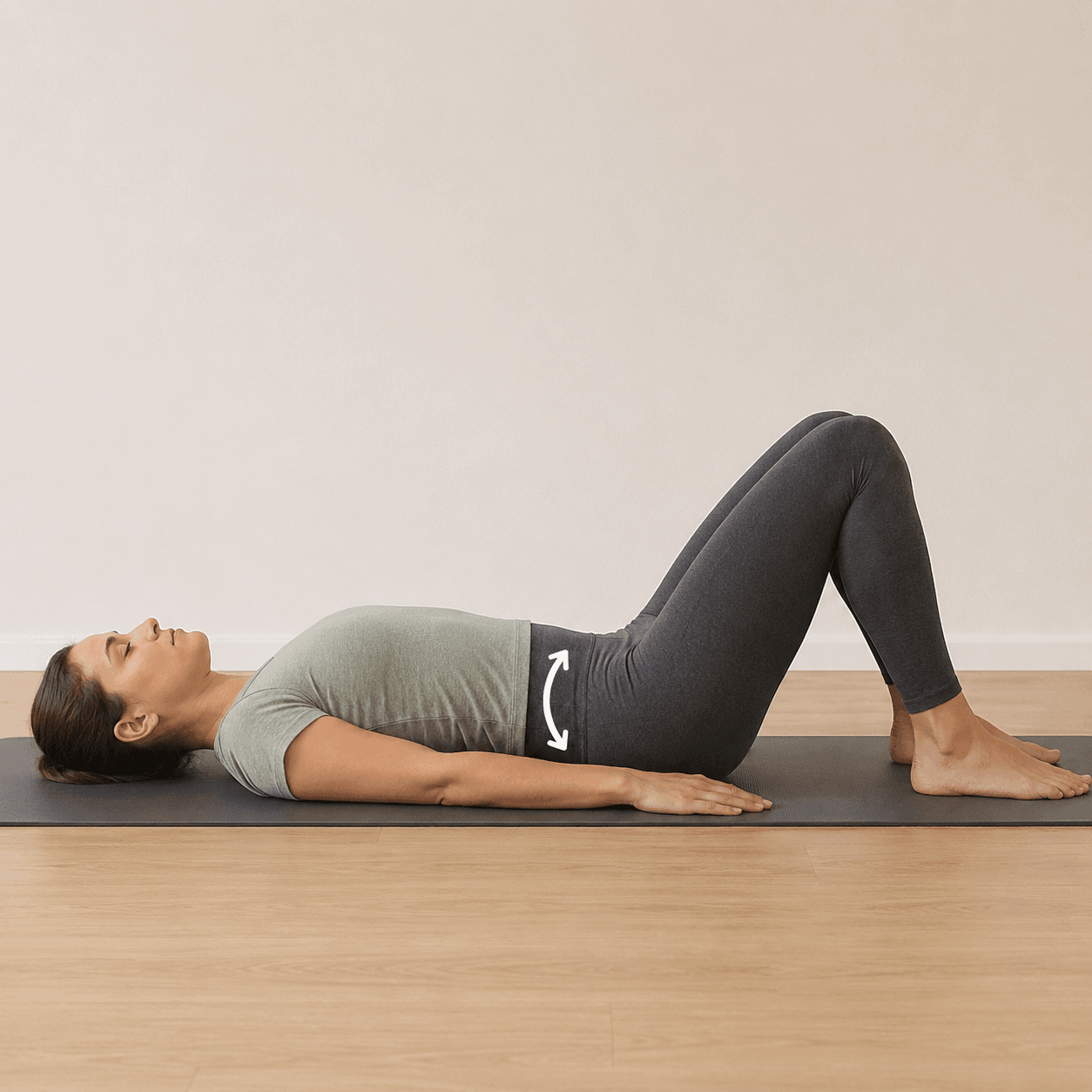
1. Supine pelvic tilt
Goal: Gently mobilise the pelvis and lower back.
How to do it: Lie on your back with both feet hip-width apart. Slowly tilt your pelvis backwards so that your lower back gently approaches the surface beneath you. Release and return to the starting position with control.
Repetitions: 10–15
Pay attention to: Keep the movement small and controlled. Do not force your back into the floor.
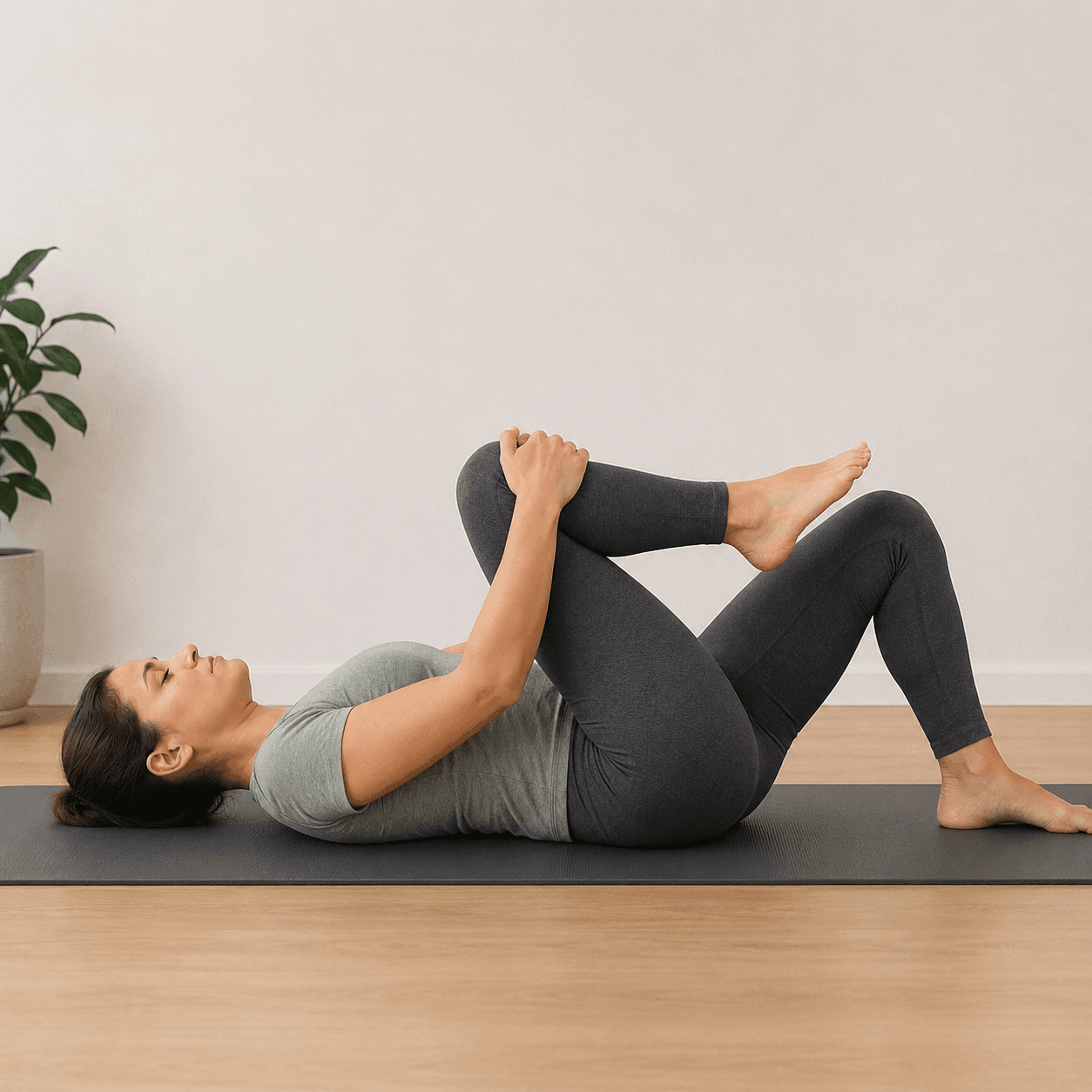
2. Knee to chest
Goal: A calm movement position for the lower back.
How to do it: Lie on your back. Slowly draw one knee towards your chest and hold the thigh or knee lightly with your hands. The other foot can remain on the floor. Hold briefly, then change sides.
Duration: 20–30 seconds on each side, 2 rounds
Pay attention to: Keep your shoulders and neck as relaxed as possible. Draw the leg in only as far as feels comfortable.
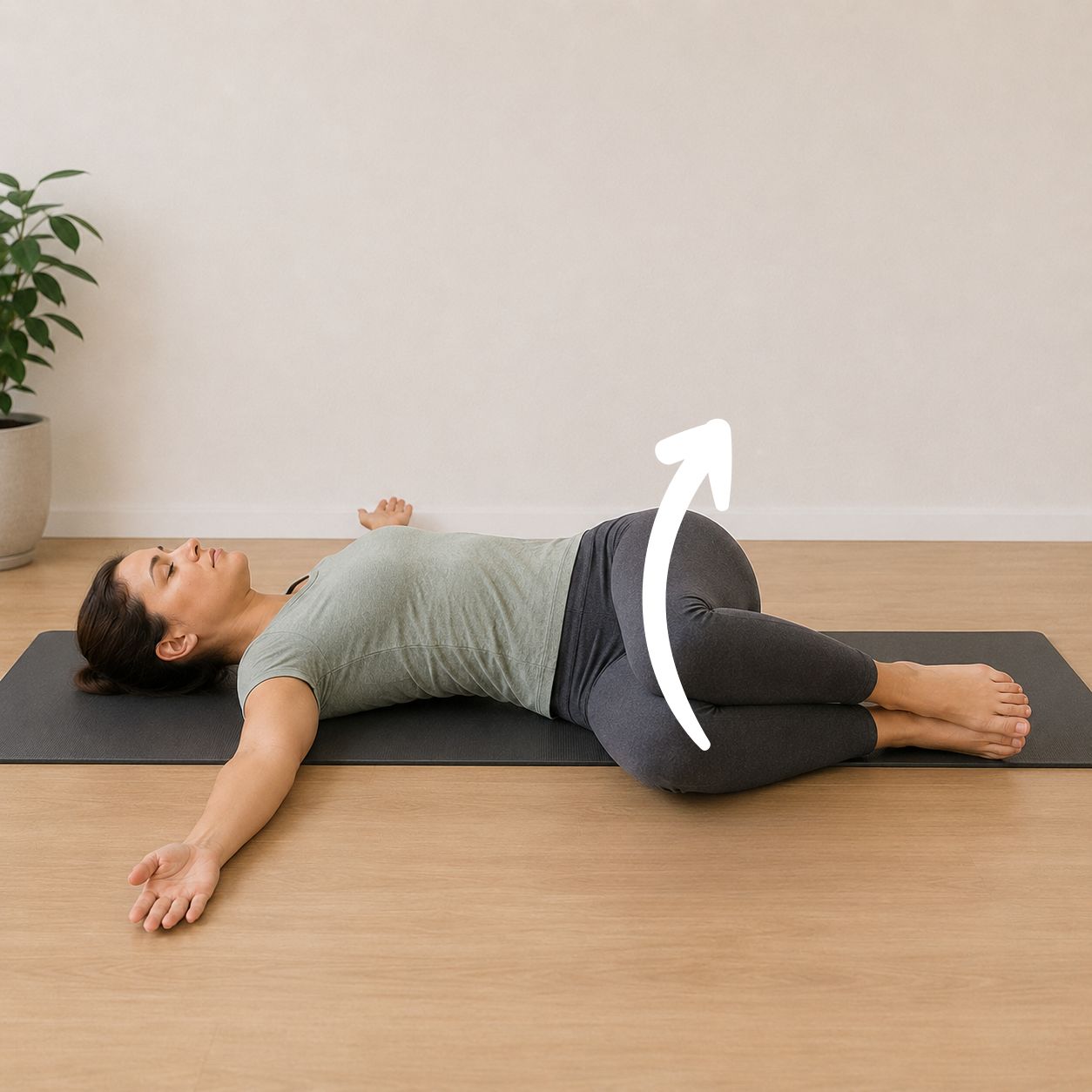
3. Supine rotation
Goal: Mobilise rotation through the trunk and spine.
How to do it: Lie on your back with your feet on the floor and your arms out to the sides. Slowly lower both knees together to one side. Return to the centre, then move them to the other side.
Repetitions: 8–10 on each side
Pay attention to: Keep your shoulders on the floor as much as possible. Move your knees only as far as feels comfortable.
Neck & shoulders
These exercises bring movement to the neck and shoulder girdle and activate the muscles around the cervical spine and shoulder blades.
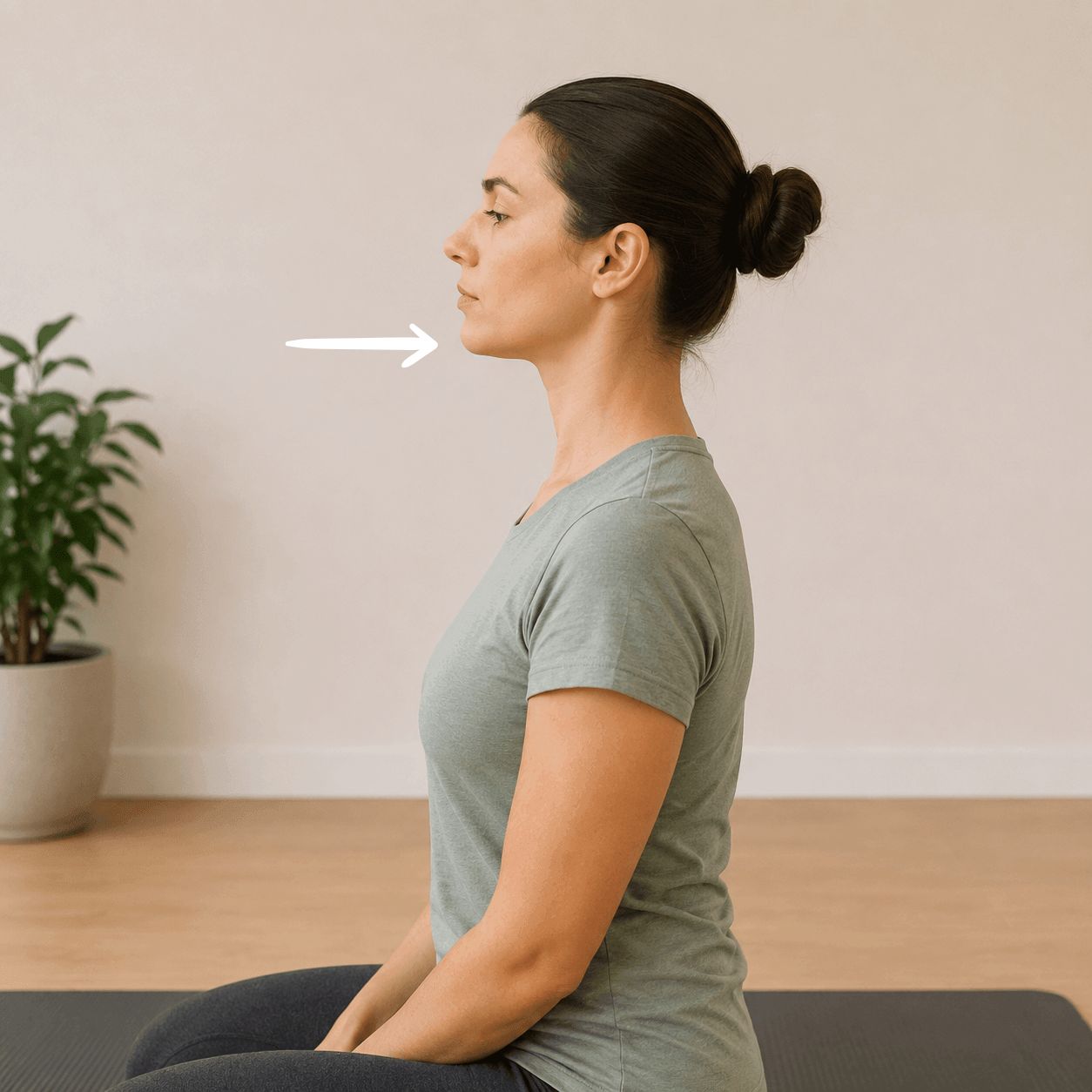
1. Chin tuck
Goal: Activate the neck muscles and encourage controlled movement of the cervical spine.
How to do it: Sit or stand upright and look straight ahead. Slowly draw your chin straight backwards, as if making a small double chin. Hold briefly, then release.
Repetitions: 8–12
Pay attention to: Do not tilt your head down or extend it backwards. Keep the movement small and controlled.
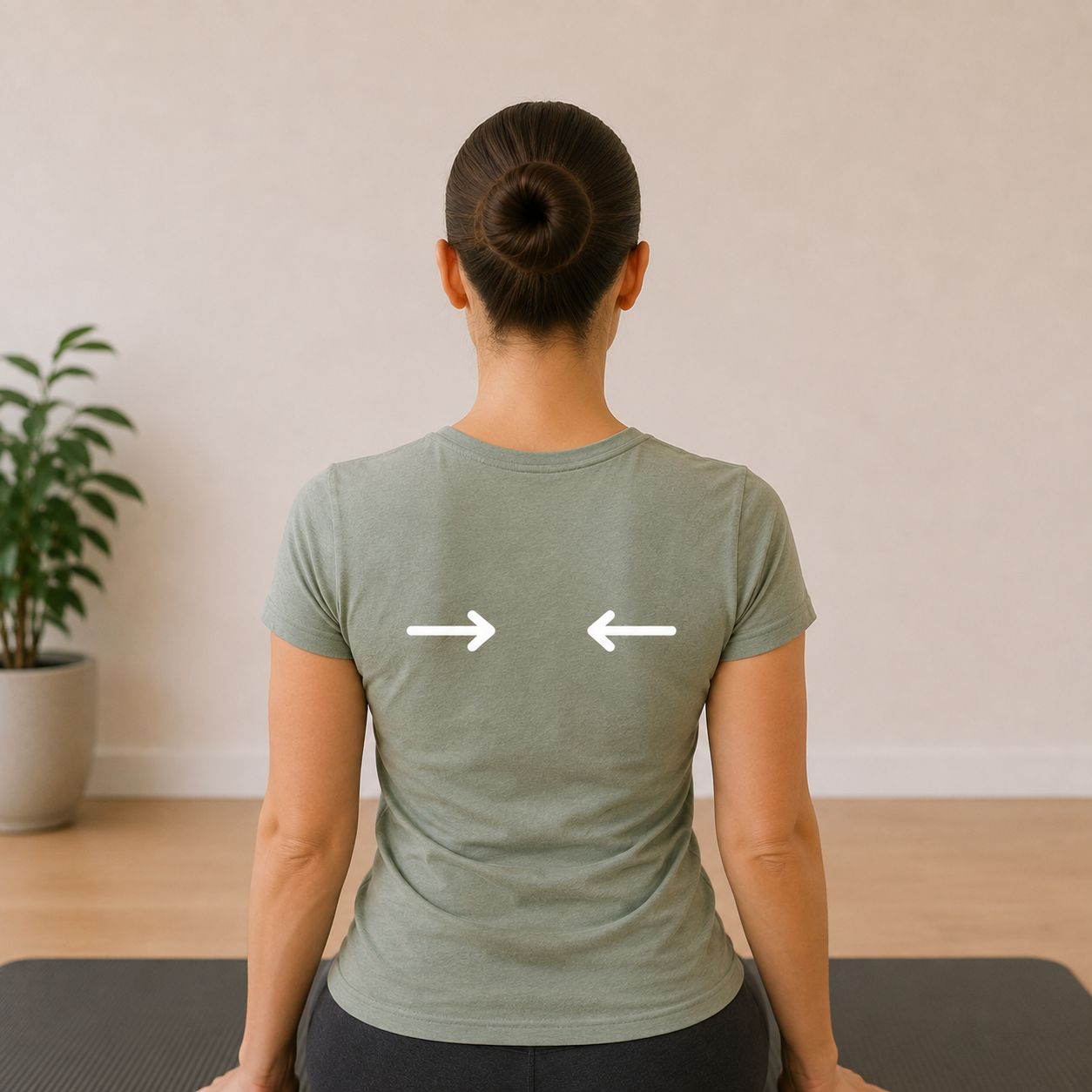
2. Shoulder-blade squeeze
Goal: Activate the muscles between the shoulder blades.
How to do it: Sit or stand upright with your arms relaxed by your sides. Slowly draw your shoulder blades backwards and slightly down. Hold briefly, then release.
Repetitions: 10–15
Pay attention to: Do not lift your shoulders towards your ears or arch your lower back.
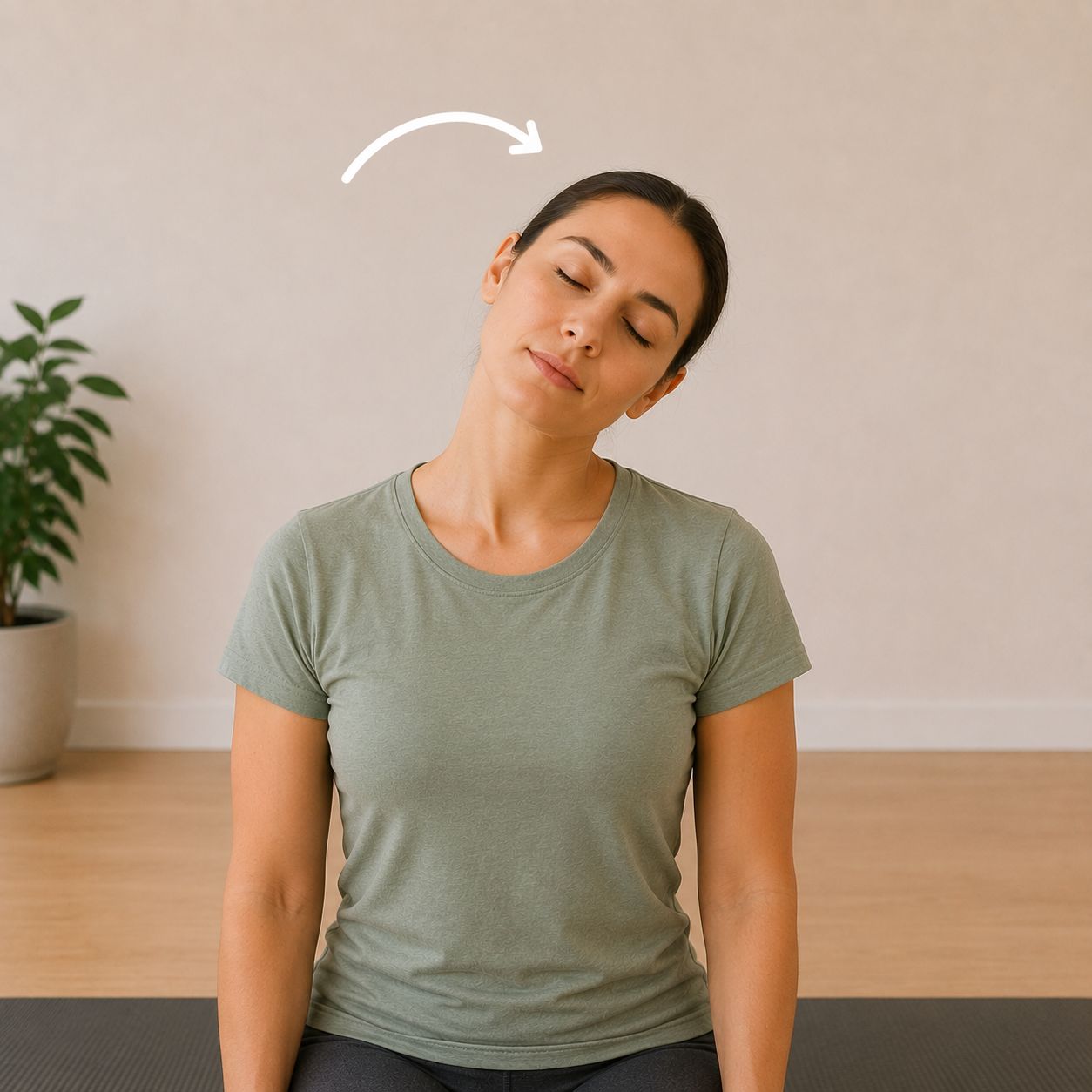
3. Side neck movement
Goal: Mobilise the neck sideways.
How to do it: Sit upright and look straight ahead. Slowly tilt your head to one side, bringing your ear towards your shoulder. Return to the centre with control, then change sides.
Repetitions: 6–8 on each side
Pay attention to: Keep both shoulders relaxed. Do not pull on your head with your hand, and move only as far as feels comfortable.
Thoracic spine
These exercises target movement in the thoracic spine and encourage rotation and extension through the upper back.
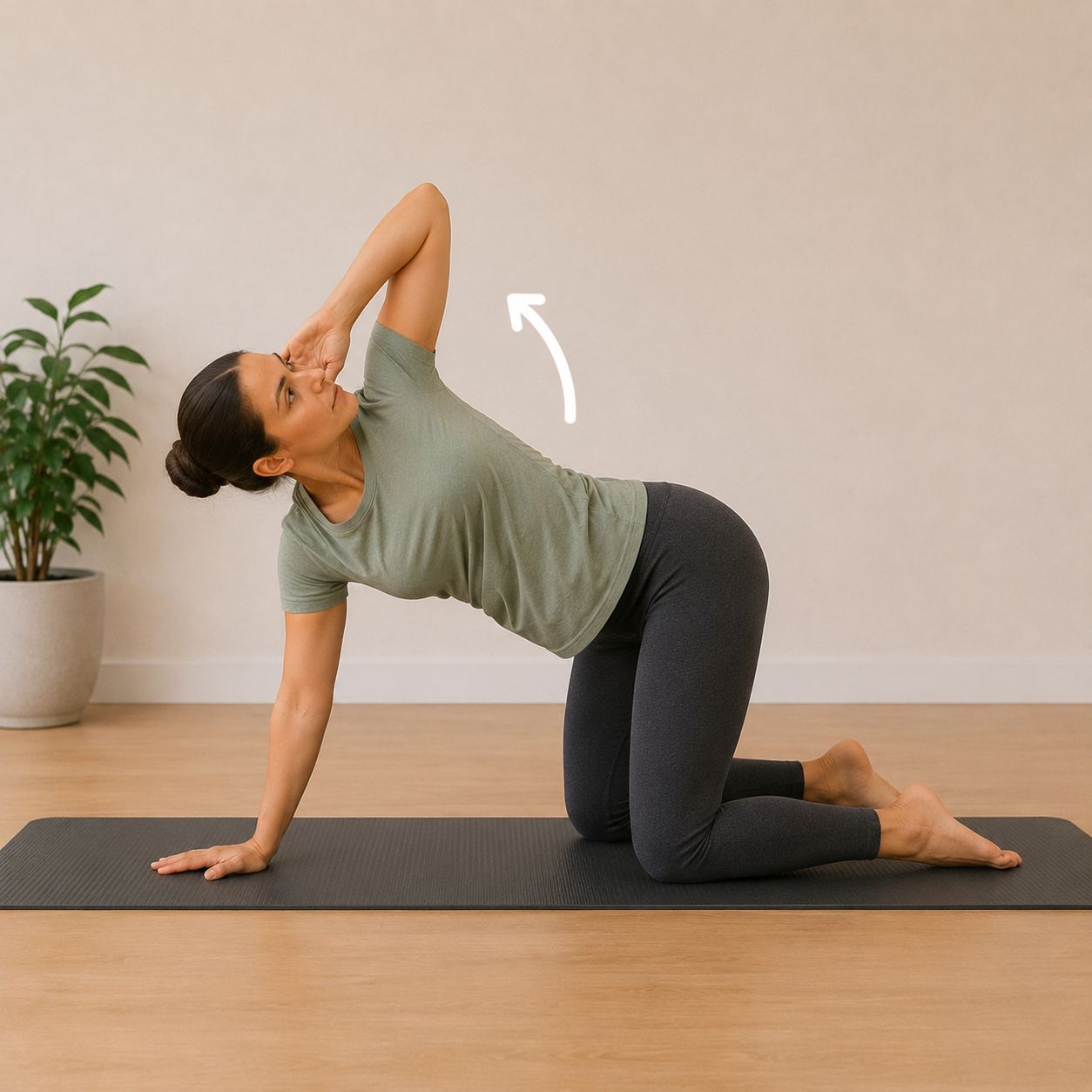
1. Rotation on all fours
Goal: Mobilise rotation through the thoracic spine.
How to do it: Start on all fours. Rest one hand lightly behind your head. Slowly rotate your upper body and move the elbow upwards. Return to the starting position with control and repeat.
Repetitions: 6–8 on each side
Pay attention to: Keep your pelvis and lower back as still as possible. The rotation should come mainly from the upper back.
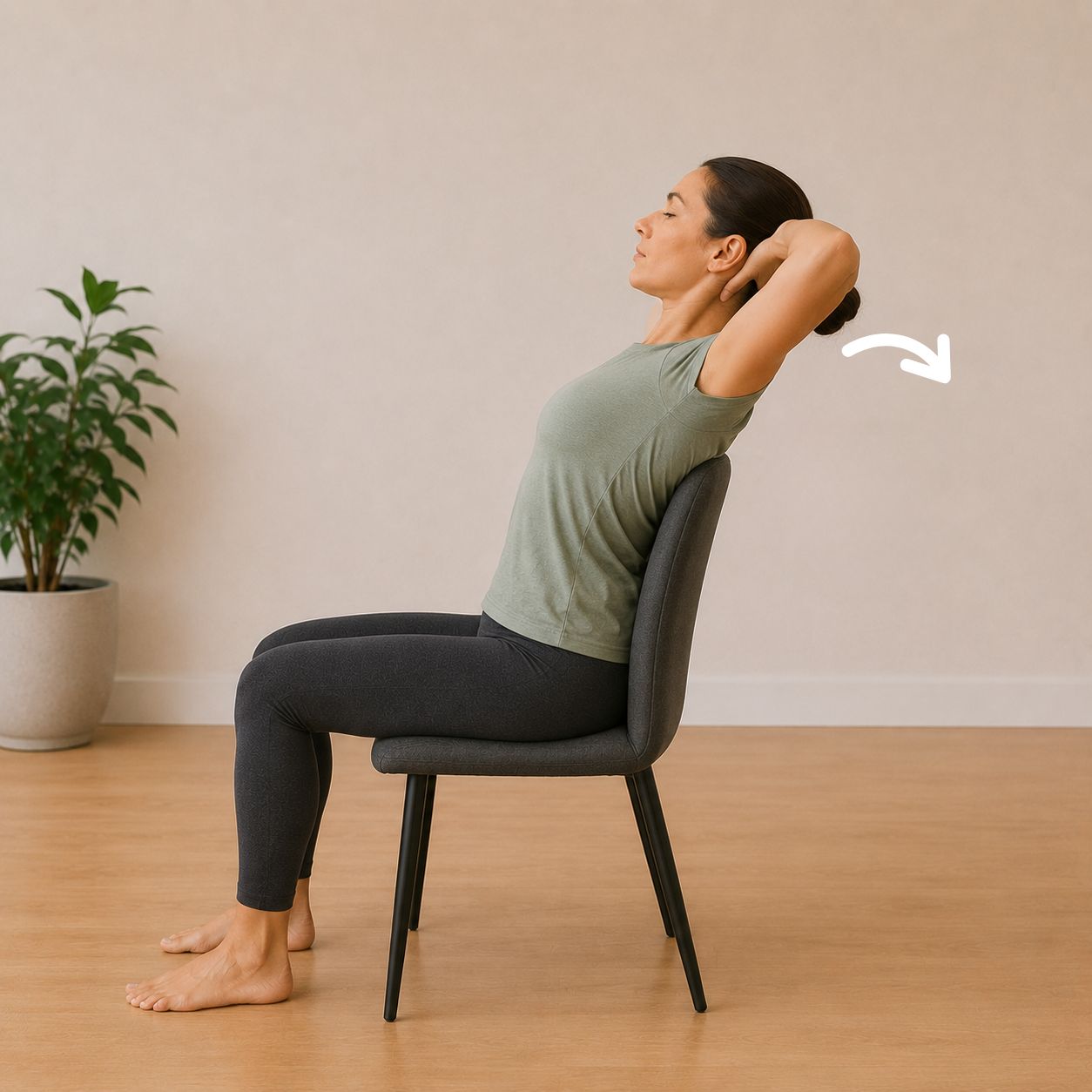
2. Thoracic extension over a chair
Goal: Encourage extension of the thoracic spine.
How to do it: Sit on a stable chair and place your hands loosely behind your head. Slowly lean your upper back over the backrest. Return to the upright position with control.
Repetitions: 8–10
Pay attention to: Avoid arching your lower back. Keep the movement calm and focused on the upper back.
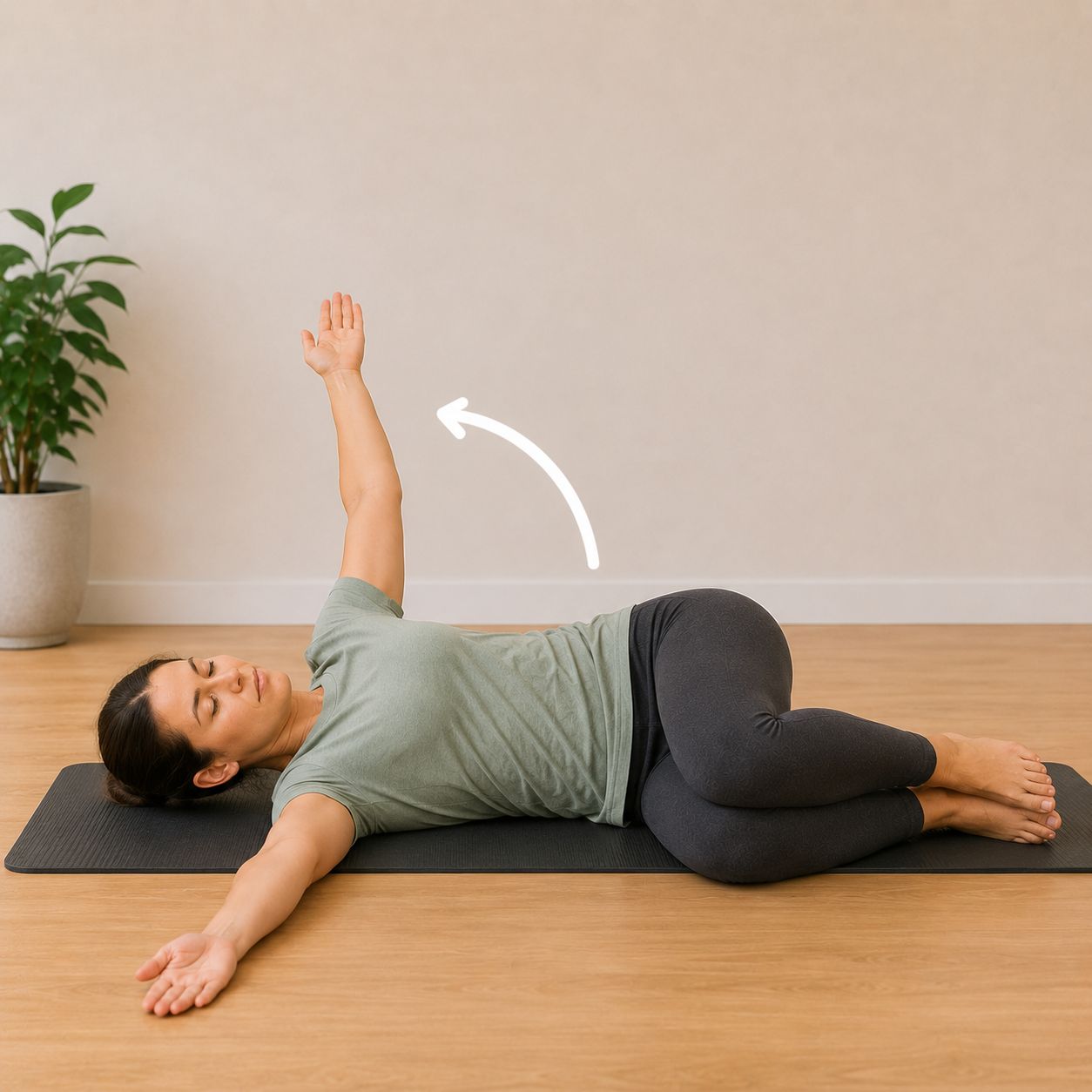
3. Open Book
Goal: Mobilise the thoracic spine and rib cage in rotation.
How to do it: Lie on your side with your hips and knees slightly bent. Extend both arms in front of you. Slowly open the top arm to the other side and allow your upper body to rotate. Return the arm with control.
Repetitions: 6–8 on each side
Pay attention to: Keep your knees together and resting on the floor as much as possible. Move the arm only as far as feels comfortable.
HIPS & PELVIS
Hips & pelvis
These exercises bring movement to the hips and pelvis, mobilise the surrounding muscles and support controlled movement through the hip area.
1. Kneeling hip-flexor stretch
Goal: Stretch the front of the hip and the hip flexors.
How to do it: Start in a half-kneeling position with one knee on the floor and the other foot in front. Lift your upper body and slowly move your pelvis forwards until you feel a comfortable stretch at the front of the rear hip.
Duration: 20–30 seconds on each side, 2 rounds
Pay attention to: Avoid arching your lower back. Keep your upper body upright and move your pelvis forwards with control.
2. Seated glute and hip stretch
Goal: Mobilise the gluteal muscles and outer hip.
How to do it: Sit on a stable chair. Place one foot on the opposite thigh so the knee points outwards. Keeping your back long, lean slightly forwards from the hips until you feel a comfortable stretch in the gluteal area.
Duration: 20–30 seconds on each side, 2 rounds
Pay attention to: Do not press down on the knee. Keep your back long and let the movement come from the hip.
3. Glute Bridge
Goal: Activate the gluteal and posterior hip muscles.
How to do it: Lie on your back with both feet about hip-width apart. Gently engage your glutes and slowly lift your pelvis until your trunk and thighs form roughly one line. Lower your pelvis again with control.
Repetitions: 10–15
Pay attention to: Lift only as high as feels comfortable. Do not force your lower back into an arch.
KNOWLEDGE THAT HELPS
Understand why movement supports your back.
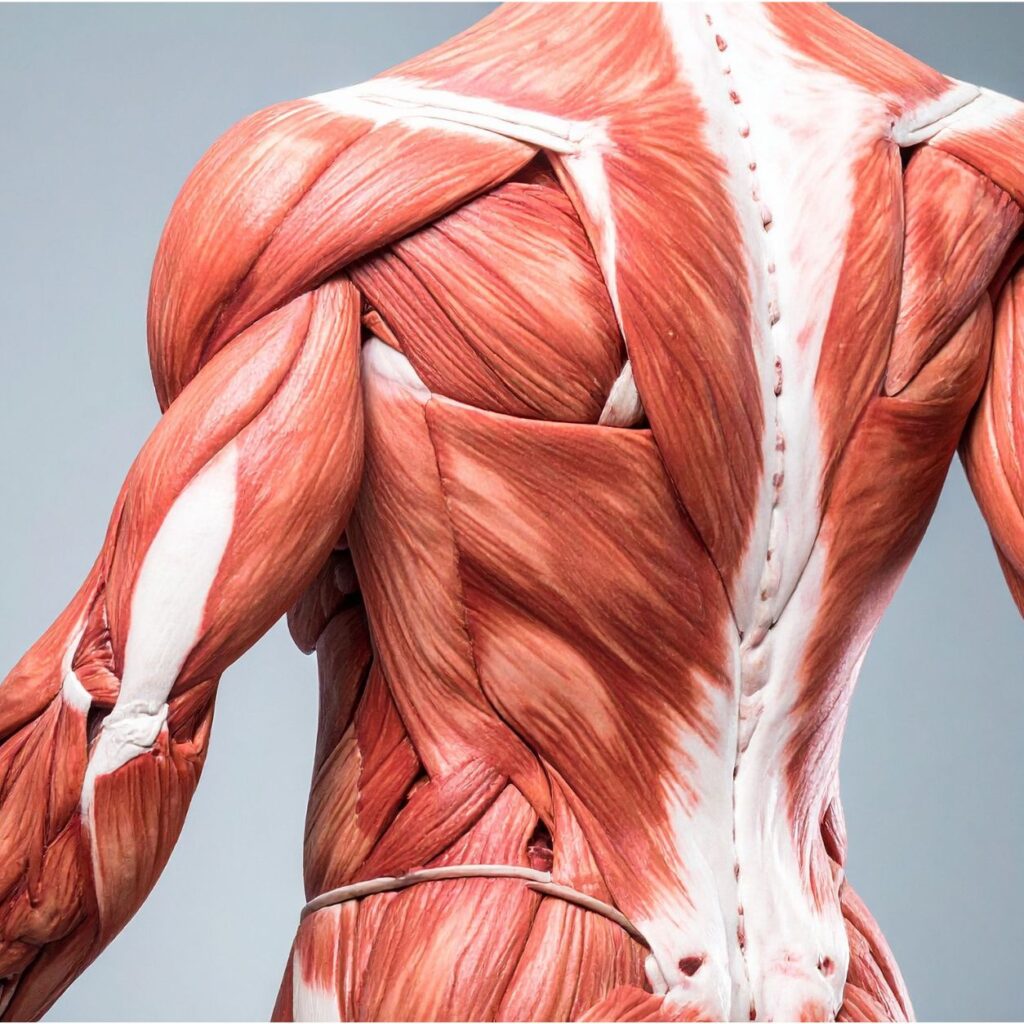
Learn more about the spine, intervertebral discs and muscles, and how physical load and recovery work together. Explore back health →
Make movement part of your daily life.
You do not have to do everything at once. Choose one exercise and begin with a few minutes.