UNDERSTANDING BACK PAIN
Back pain rarely has a single cause
A finding on an MRI scan does not automatically explain why your back hurts. Back pain can be influenced by the interaction of physical load, movement, recovery, the nervous system and other factors.
Why your back may hurt ↓


Good to know: Back pain is real. At the same time, pain is influenced by many factors. Understanding this can help you avoid viewing symptoms solely as a sign that your spine is “damaged”.
UNDERSTANDING PAIN
Pain is a warning signal — but not a measure of damage
Pain is a protective response. The nervous system processes information from the body and assesses whether there may be a threat. Pain can therefore be very real and intense without its severity directly reflecting the extent of tissue damage.
Conversely, changes in the spine or intervertebral discs may be present without causing symptoms.
Structural changes ≠ pain
Age-related changes in the intervertebral discs or joints can also be found in people who do not have back pain.
Severe pain ≠ severe damage
Pain intensity alone does not reliably show how much a structure may be damaged.
POSSIBLE CONTRIBUTING FACTORS
Back pain often results from several interacting factors
Back pain often cannot be traced to one single cause. Different physical and everyday factors may interact and influence how capable your back feels and how pain is perceived.
1. Physical load & movement
Unfamiliar, very high or repetitive loads may contribute to symptoms. Long periods with little movement can also make the back feel less capable.
2. Muscles & movement control
Muscles stabilise and move the back. Fatigue, unfamiliar loads or altered movement patterns can affect how forces act on it.
3. Structures & changes
Intervertebral discs, joints, muscles or other structures may contribute to symptoms. Changes seen on an MRI or X-ray do not necessarily cause pain.
4. Nervous system & recovery
The nervous system plays a central role in processing pain. Sleep, recovery, stress and previous pain experiences can also influence how sensitively the system responds to physical load.
What often matters is not one factor in isolation, but how physical load, movement, recovery and pain processing interact.
HOW PAIN CAN CHANGE OVER TIME
Back pain can change over time
Back pain may begin suddenly or develop over time. How long symptoms last does not automatically indicate how much a structure may be damaged.
Acute symptoms
These are new symptoms that have usually been present for only a short time. They may follow an unfamiliar load or movement, although sometimes there is no clear trigger.
The body is often particularly sensitive at first. In many cases, acute non-specific back pain improves within a few weeks.
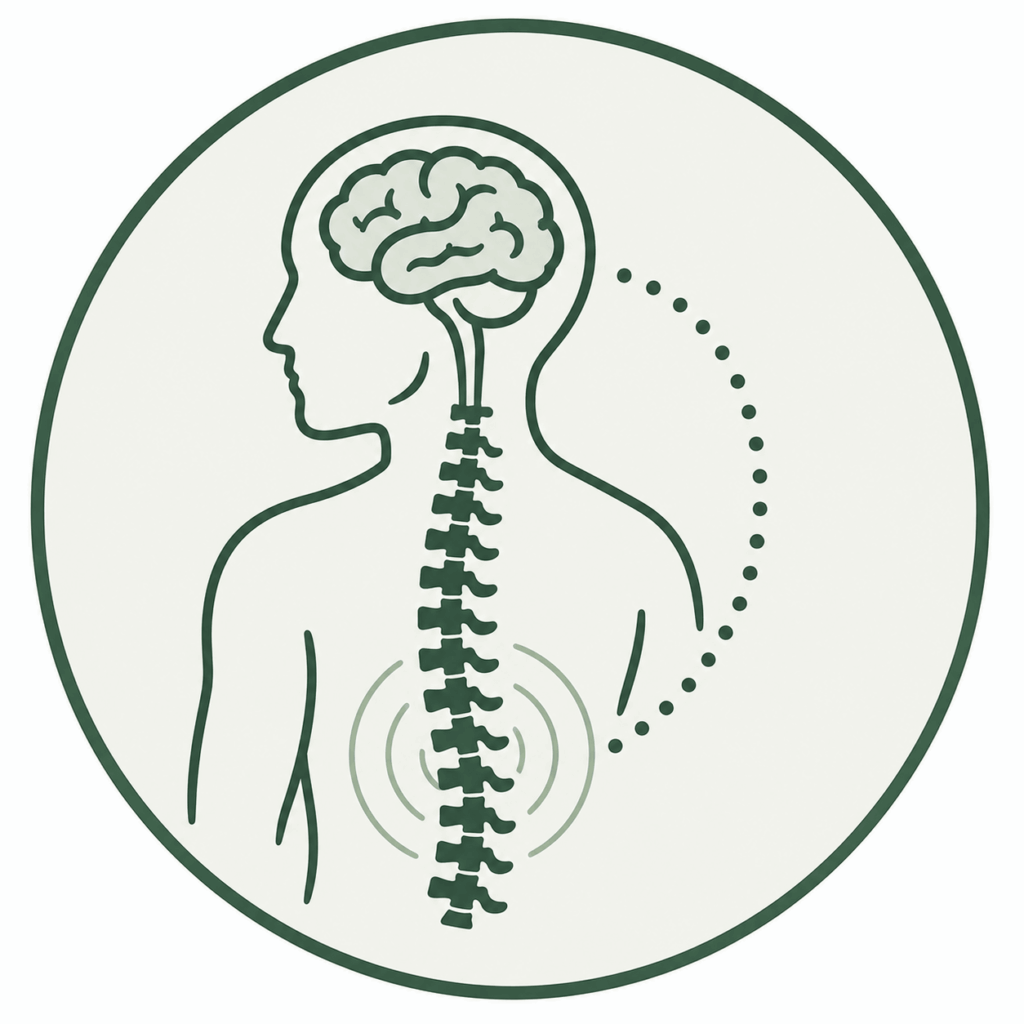
When pain persists
When symptoms continue for longer, changes in pain processing may increasingly play a role alongside physical factors.
The nervous system can become more sensitive to stimuli. This does not automatically mean that the back is becoming progressively more damaged.
Important: Persistent pain does not automatically mean that movement should be avoided. Appropriate activity and gradually rebuilding capacity can be important parts of managing back pain.
TAKING AN ACTIVE APPROACH
Movement, physical load and recovery belong together
The back is designed for movement and physical load. Rather than protecting it indefinitely, the aim is to combine movement, strength and recovery sensibly and build capacity gradually within your own limits.
Build strength & capacity
Muscles adapt to physical load. Gradually building strength and capacity can help prepare your back for the demands of everyday life, work and leisure.

Relief & recovery
Physical load requires recovery. Periods of relaxation, sufficient sleep and changes of position give the body an opportunity to recover.
No single approach works equally well for everyone. What matters is what feels helpful, suits your symptoms and can be maintained in everyday life.
PUTTING SYMPTOMS INTO PERSPECTIVE
When should you seek medical advice?

Back pain is common and in many cases is not caused by a serious medical condition. However, certain symptoms or accompanying signs should be medically assessed.
Seek immediate medical help
- Problems with bladder or bowel control, or new numbness around the buttocks, genitals or inner thighs.
- New or increasing significant muscle weakness or paralysis, especially in the legs.
- Severe back pain after a serious fall or accident, particularly if an injury may have occurred.
Arrange a prompt medical assessment
- Very severe or increasing pain, especially if it does not settle or becomes markedly worse.
- New or increasing numbness or tingling.
- Fever, feeling very unwell or unexplained weight loss together with back pain.
- Persistent symptoms that do not improve over time or increasingly restrict your everyday activities.
None of these warning signs applies to you?
Back pain is then often no cause for concern. Movement and a gradual return to normal everyday activities are appropriate in many cases.
→ What you can do for your back now
This website provides general information and is not a substitute for individual medical diagnosis or treatment.
YOUR NEXT STEP
Understanding is the first step. Movement is the next.
Back pain does not automatically mean that you need to protect your back from movement. Regular movement, appropriate physical load and sufficient recovery can help build confidence in your back and improve its capacity.
Improve mobility · Build strength · Find relief · Understand
© 2026 Dieter Kofler
Legal notice · Privacy policy · Transparency