RELIEF · RECOVERY · EVERYDAY LIFE
Your back needs activity. And it needs recovery too.
Movement and physical load are part of a healthy back. It is equally important to allow time for recovery. Learn how to manage everyday demands and include deliberate periods of relief.
Explore ways to relieve your back ↓
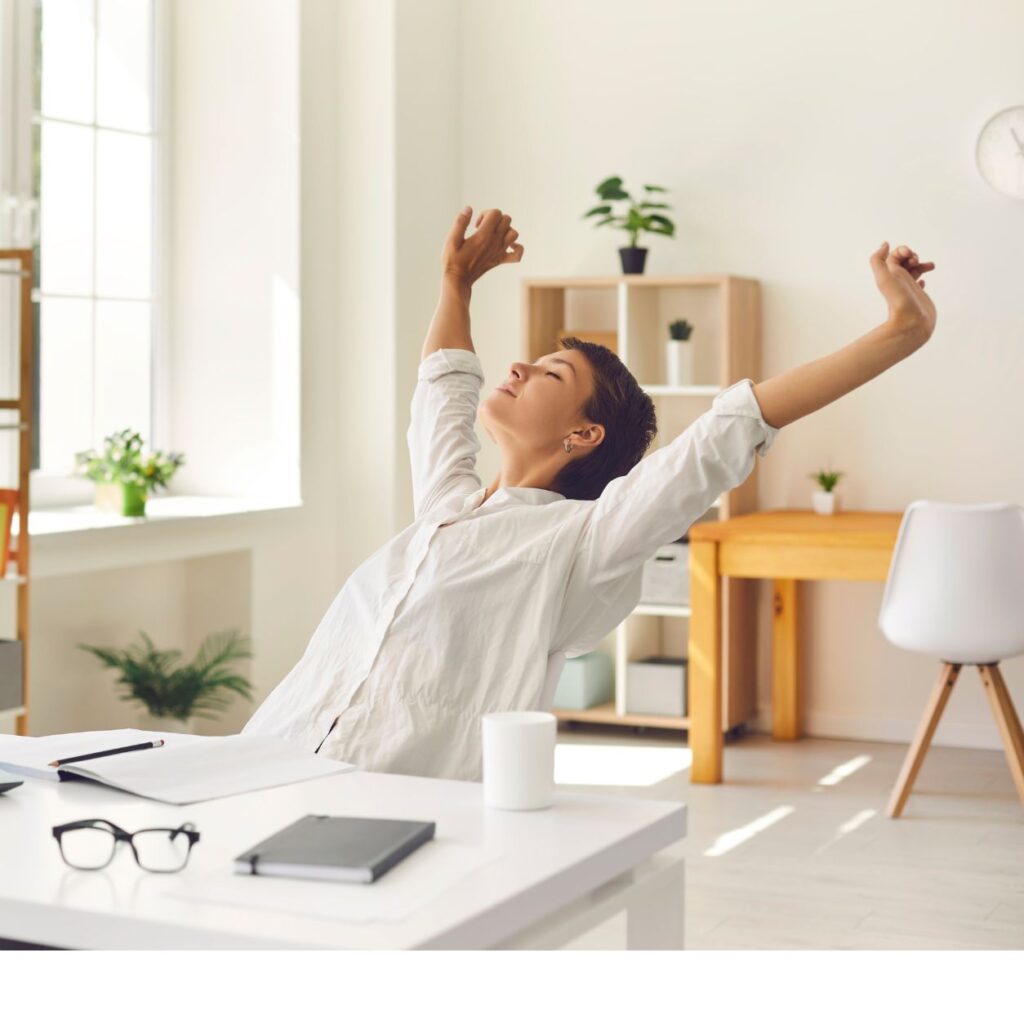
LOAD AND RECOVERY
Relieving your back does not mean avoiding activity.
Your back is designed for movement and load. Problems can arise when demands are very one-sided, continue for a long time or are not balanced by enough variety. Relief therefore does not mean doing as little as possible. It means deliberately interrupting sustained load and giving your body variety and time to recover.
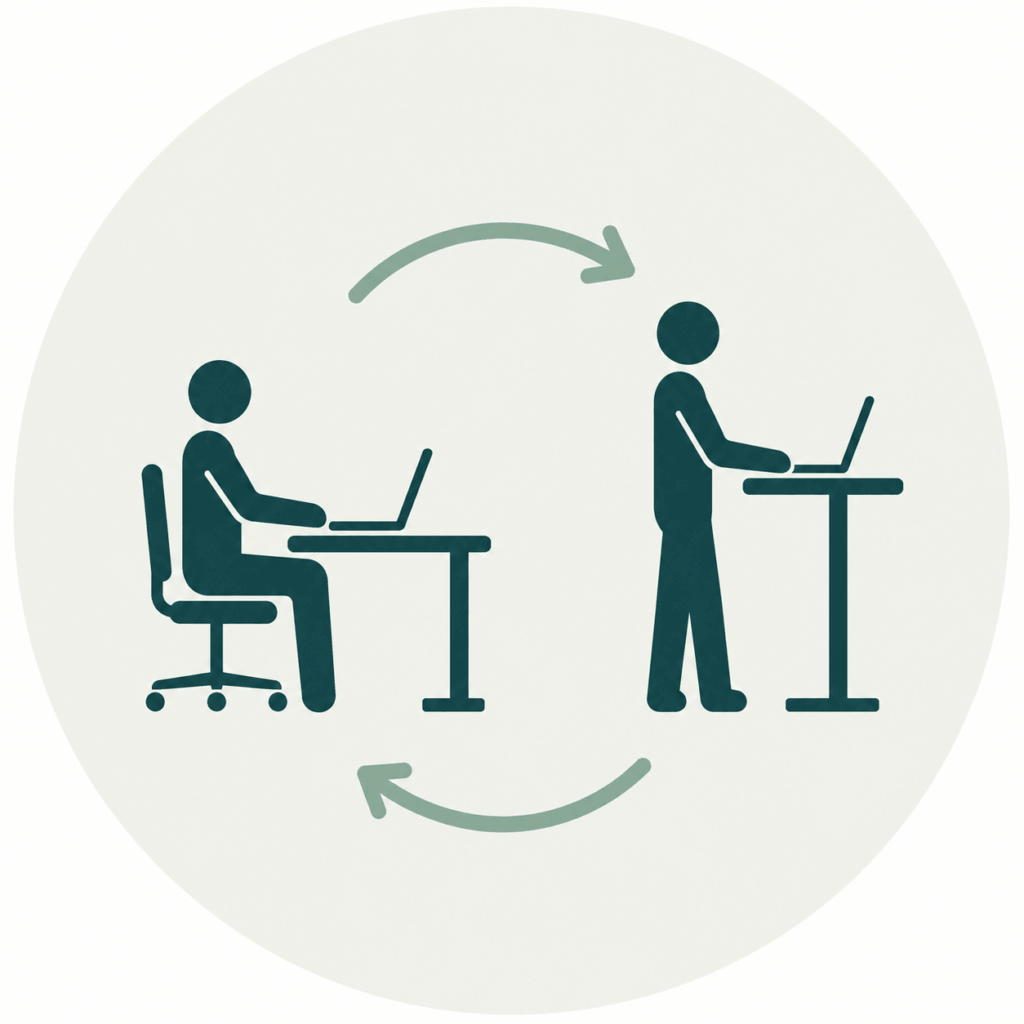
1. Change position
Staying in the same position for a long time can become uncomfortable. Regular changes of position add variety to your day.
2. Move
Short movement breaks can help take your back through different directions of movement and interrupt one-sided strain.
3. Recover
Load and recovery belong together. Deliberate rest periods give your body time to recover from previous demands.
RELIEF IN EVERYDAY LIFE
Small changes are often enough.
Relieving your back does not need to be complicated. It often means interrupting prolonged one-sided strain, changing position and deliberately including movement in your day.
1. Change position regularly
Sitting is not inherently bad. What matters is avoiding the same position for hours at a time. Alternate regularly between sitting, standing and moving.
2. Take short movement breaks
Even brief movement breaks add variety to your day. Mobilise your back from time to time and move it deliberately in different directions.
3. Use comfortable positions that reduce strain
After longer periods of physical demand, it may feel pleasant to adopt a position in which you can consciously relax. Try different positions and notice what feels comfortable for you.
4. Make recovery part of your routine
Sleep, breaks and recovery are part of an active lifestyle. Give your body enough time to recover after exertion.
Not every form of relief feels equally comfortable for everyone. The key is to adapt movement, load and recovery to your individual situation.
TARGETED BACK RELIEF
What happens during spinal traction?
Traction applies a gentle pulling force along the length of the spine. Its purpose is to temporarily reduce pressure on the spine and allow a relaxed position.
Traction is used in different ways, including in physiotherapy and with specialised devices. Controlled application and an individually appropriate dose are essential.
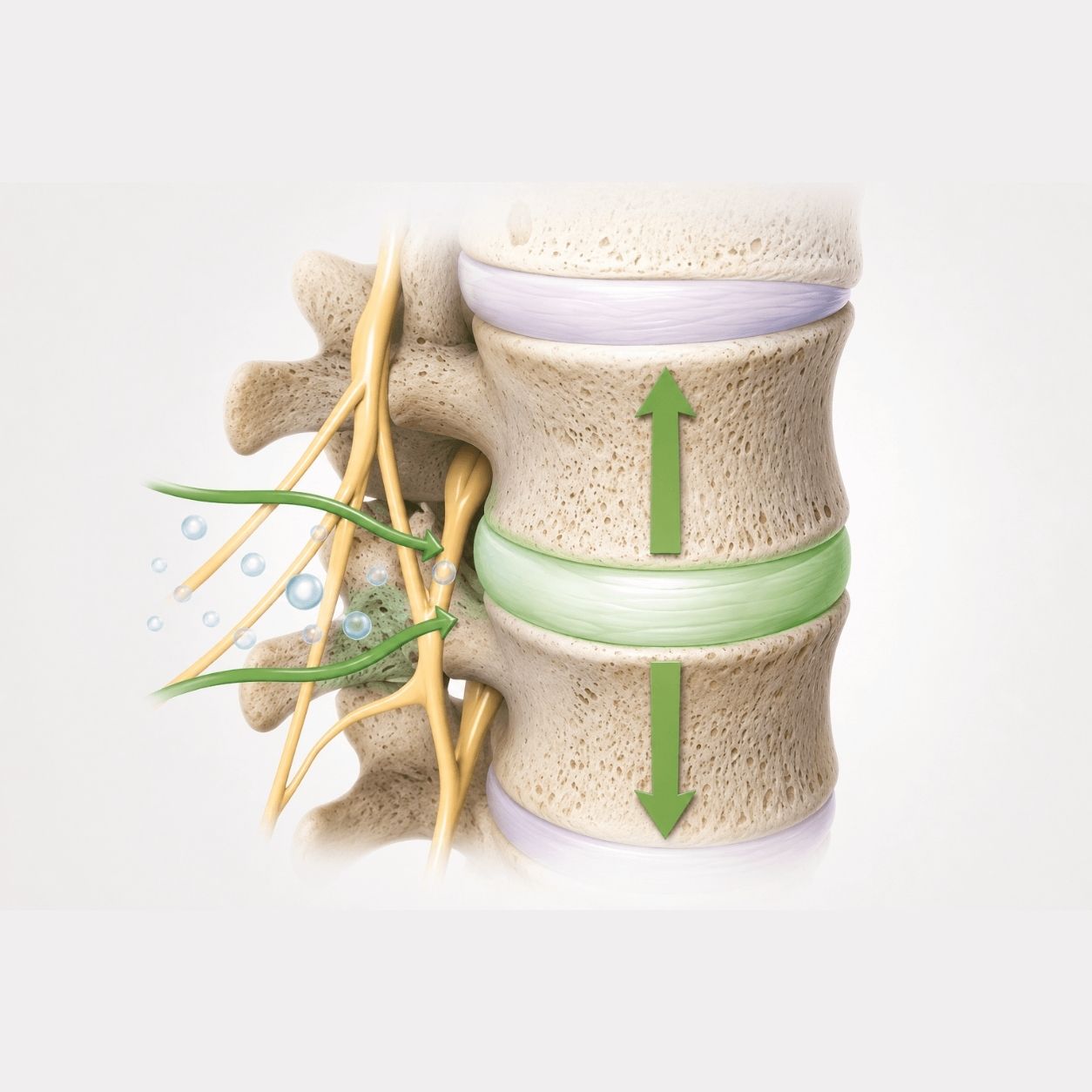
1. Gentle traction
A controlled pulling force is applied along the spine.
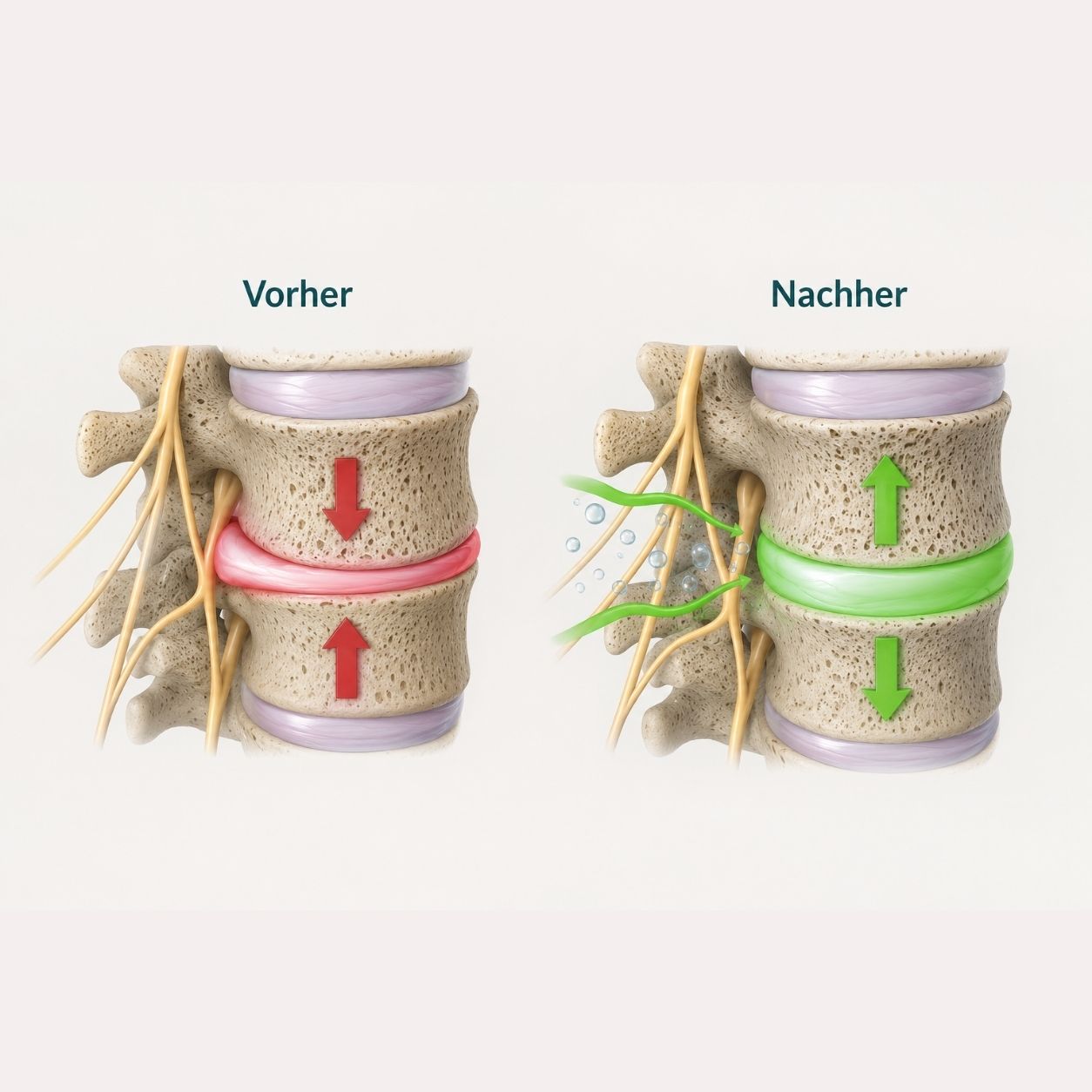
2. Temporary relief
The mechanical load on spinal structures may be temporarily altered during use.
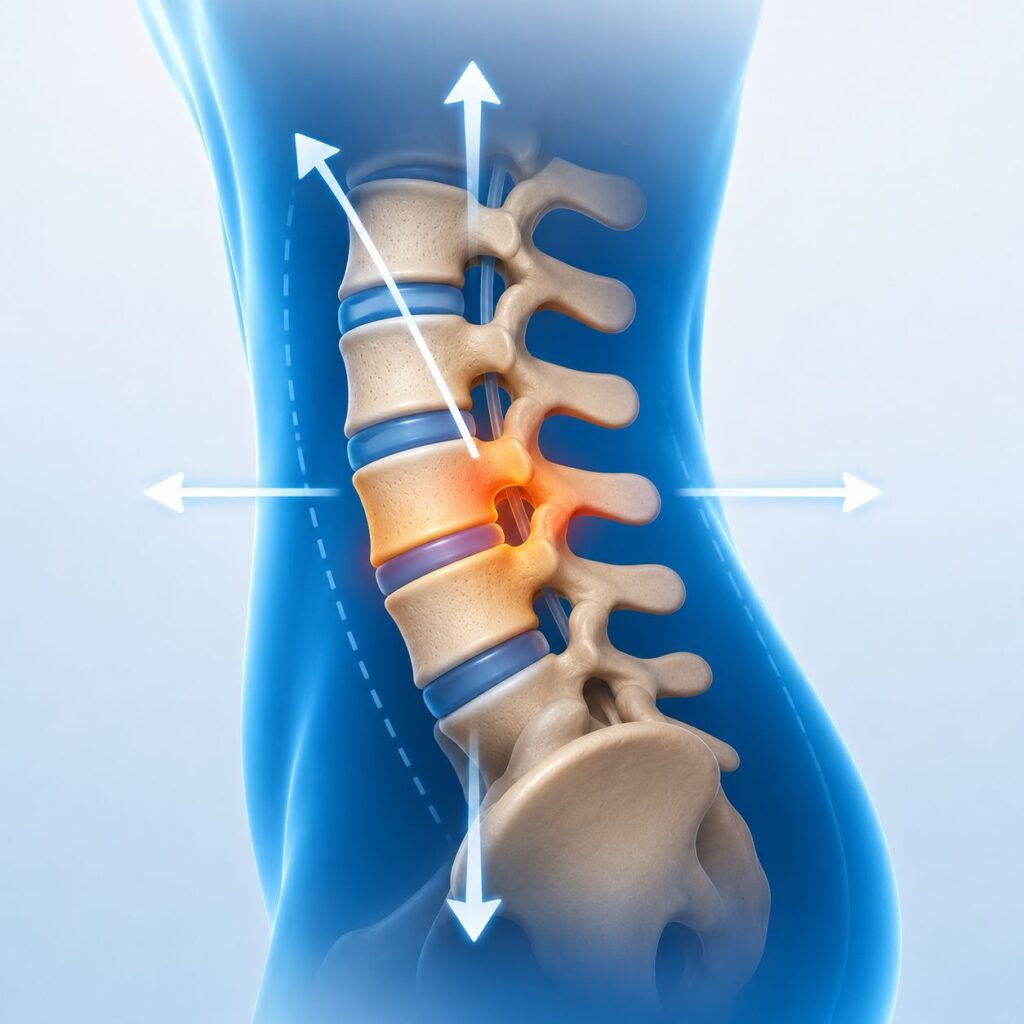
3. Controlled use
The intensity, duration and position should suit the individual and the situation.
Note: Traction is not suitable for every person or every type of symptom. Seek medical or physiotherapy advice before use if symptoms are acute, severe or unexplained.
BACK RELIEF AT HOME
An easy way to include traction in everyday life.
Traction does not have to take place only in a clinic. Suitable solutions can also provide controlled traction at home.
tendo was developed to provide back relief in an upright position. The body remains in a natural position while a controllable traction force reduces load on the spine.
Upright use
No inverted or upside-down position.
Adjustable to the individual
The level of relief can be adapted to personal comfort.
Designed for home use
Easy to include in an everyday routine.
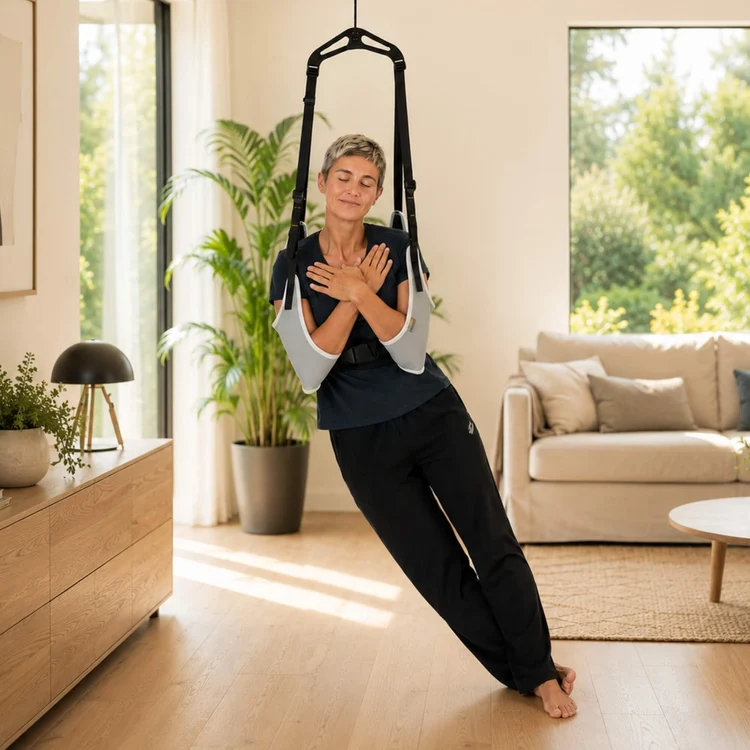
tendo is a komovo product. Gesunder Rücken and komovo are operated by the same company.
CONSIDERED AND INDIVIDUAL
Relief should be tailored to your back.
What feels comfortable and relieving varies from person to person. Movement and changes of position are useful in many situations, while targeted measures such as traction may be more or less suitable depending on the symptoms.
Relief may be helpful if …
✓ you have been sitting or standing in one position for a long time
✓ your back feels tired or tense after exertion
✓ you want to include movement and recovery periods more deliberately in your day
✓ a particular form of relief feels comfortable for you
Seek advice first if …
Do not simply begin targeted traction if symptoms are new, severe or unexplained.
Prompt medical assessment is particularly important for neurological symptoms such as numbness, marked muscle weakness, or changes in bladder or bowel function.
If you have a known spinal condition, injury or previous spinal surgery, discuss traction with a doctor or physiotherapist before use.
Important: Relief is not a substitute for medical diagnosis or treatment. Persistent, worsening or unexplained back symptoms should be assessed by a qualified healthcare professional.
© 2026 Dieter Kofler
Legal Notice · Privacy Policy · Transparency